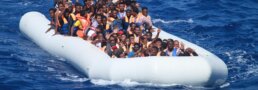
The distance between human rights and the EU: the Libyan migration crisis
“From the big ship they were making calls, but said: ‘Sorry, we can’t take you, it’s not my fault, orders are that Libyans will come to take you’. Meanwhile, I could see people dying on the other boat, pieces of boat were floating and bodies too. [By the time] a small Libyan ship came to get us...all the people on the other dinghy had died.”
- the words of 28-year-old Emmanuel, a Cameroonian refugee who fled the conflict and ended up adrift on a dinghy watching another sinking dinghy. Interview conducted by Amnesty International.
Many people have died trying to cross the Mediterranean, and roughly 53 people who might have shared the same fate, are alive today thanks to the brave actions of Carola Rackete, the captain of Sea Watch 3, a search and rescue vessel registered in the Netherlands. Her subsequent arrest has generated much discussion about Maritime Law, human trafficking, the Italian interpretation of the laws governing their territorial waters, and the duty of European states to share the burden of incoming migrants. But amidst all of this, let’s not forget the reason why Rackete was out at sea in the first place - she was there to rescue people in dire need and at serious risk of drowning.
Rackete, rescued 53 migrants who were drifting on a rubber boat as they tried to complete their journey to Europe. Rackete was at sea for 17 days negotiating with Italian officials in an attempt to bring the migrants and her crew of 20 to safety. The Italian government refused permission for the ship to dock and physically tried to prevent the Sea Watch 3 from making landfall. Rackete decided to berth her ship at the island of Lampedusa, Italy regardless. She was arrested on 29 June and 5 European states, Germany, Luxembourg, Finland, France, Portugal agreed to take her passengers.
Italian Interior Minister Matteo Salvini dubbed her a criminal, accused her of committing an act of war by "resisting a warship". Upon her arrest Salvini reportedly tweeted "Mission accomplished," and "Pirate ship seized, maximum fine for foreign NGO."
The valorous decision to rescue migrants and prioritise their lives, human rights and human dignity left Rackete potentially facing 10 years in prison and a fine of up to €50,000. Thankfully, she was cleared of those charges and released but remains under investigation for human trafficking. To many, she is a heroine and her actions have led to numerous campaigns in support of her and against what some have called the criminalisation of compassion. She has been applauded for doing the necessary work whilst EU politicians procrastinate and gamble with human life.
Sea Watch have shown unwavering support for their captain with Chairman Johannes Bayer saying, “We are proud of our captain, she did exactly the right thing. She followed the law of the sea and brought people to safety…” Their mission is to conduct “civil search and rescue operations in the Central Med. In the presence of the humanitarian crisis, Sea-Watch provides emergency relief capacities, demands and pushes for rescue operations by the European institutions and stands up publicly for legal escape routes.” Their work remains crucial as thousands of people remain at the mercy of unscrupulous smugglers who endanger people’s lives by putting them in vessels that are unfit and worse, wholly unseaworthy.
People from across the African continent, fleeing persecution, war, and poverty find themselves in Libya, in what will hopefully be a temporary stop before they make the dangerous voyage to Europe. According to CNN, tens of thousands of migrants and refugees end up in Libya whilst the United Nations International Organization for Migration (IOM) puts the figure at something between 700,000 and one million.
The chilling 2017 CNN exposé of the slave markets in Libya revealed the horrific treatment of migrants at the hands of people smugglers who literally sell human beings to the highest bidder. According to the IOM many migrants are kidnapped by smugglers and held hostage until their family members can pay the ransom money.
If they are not being tormented and abused by smugglers then they are being terrorised and violated by guards at the migration detention centres. Migrants and refugees in Libya are arbitrarily detained, exploited, starved and treated without an iota of respect for life or human dignity.
According to a March 2019 Amnesty International report, roughly 5000 people are currently being detained in migration detention centres established to hold migrants intercepted by the Libyan Coast Guard as they head for Europe on their makeshift boats. Testimony from detainees include harrowing accounts of sexual assault, overcrowding, and beatings meted out by detention guards.
To many, going back to Libya is worse than death, for example another man interviewed by Amnesty International whose dinghy was intercepted by the Libyan Coast Guard said “I knew it was better to die than to go back”.
Just last week on 3 July, up to 40 migrants and refugees were killed and 80 injured when the Tajoura Detention Centre was attacked in a military airstrike.
According to the Global Detention Project, Italy and the EU continue to strike controversial migration “control” deals with various actors in Libya aimed at reducing the number of people who attempt to traverse the Mediterranean. These arrangements include investing in detention centres, “paying militias to control migration” and supporting the Libyan Coast Guard to “rescue” and intercept migrants and refugees at sea, something that has led to the kind of tragedy described above by 28-year-old Emmanuel.
In 2014-2018, Human Rights Watch reported that Italy and the EU committed at least 12 million euros to the migration detention centres despite numerous reports of grave human rights violations. Arrangements of this nature reportedly date back to the Gaddafi era, an endeavour the Global Detention Project described as a ”multi-million-Euro ‘migration management’ project”.
Detention centres are not the solution, let alone in the way in which they currently operate. The fact that Carola Rackete’s actions firstly, led to her arrest, and secondly, have been viewed as anything other than humane is a sad and deeply disturbing reflection of a failure to prioritise by Minister Matteo Salvini and those who share his views.
A document accusing the EU and its Member States of crimes against humanity has been submitted to the International Criminal Court. The file alleges that EU’s policies have resulted in “(i) the deaths by drowning of thousands of migrants, ii) the refoulement of tens of thousands of migrants attempting to flee Libya, and iii) complicity in the subsequent crimes of deportation, murder, imprisonment, enslavement, torture, rape, persecution and other inhuman acts, taking place in Libyan detention camps and torture houses.”
Perhaps Rackete’s rescue mission and this submission to the ICC will be the wake-up call that politicians need. As you are reading this article, many more people are preparing to make the perilous journey across the Mediterranean. There are no easy solutions but the current state of affairs is no solution at all. Arresting captains of rescue ships, leaving migrants to die at sea or forcing them to go back to Libya are all travesties of justice of which the EU and its Member States should be ashamed.
**This article appeared first on the Opinio Juris blog on 8 July 2019.
** Featured image U.S. navy photo by Chief Information Systems Technician Wesley R. Dickey/Released


Universal Jurisdiction- Opportunities and Hurdles
At a time when the International Criminal Court is facing significant challenges, many are questioning the trajectory of the global international criminal justice project. However, universal jurisdiction presents refreshed avenues for justice, particularly in the case of the atrocities committed in Liberia during the civil war in 1989-2003.
Last week, the Swiss Office of the Attorney General announced that former United Liberation Movement of Liberia for Democracy (ULIMO) commander Alieu Kosiah, will be prosecuted in Switzerland. As handy and advantageous universal jurisdiction is, it is unfortunately not without its complications.
Kosiah’s crimes were allegedly committed between 1993 and 1995 in the course of the first Liberian civil war which began in 1989 and ended in 1996. The second civil war followed swiftly thereafter from 1999-2003. Both wars were characterised by blatantly widespread and systematic human rights violations as well as violations of international humanitarian law. Rape, sexual slavery, torture, use of children in conflict, summary executions and mutilation were just a few of the abuses that traumatised the civilian population as warring factions jostled for power and control over the country.
Unsurprisingly, all parties to both conflicts were complicit in the violence and crime and this includes the, National Patriotic Front of Liberia (NPFL), Independent National Patriotic Front of Liberia (INPFL), United Liberation Movement of Liberia for Democracy (ULIMO), ULIMO-K, ULIMO-J, Armed Forces of Liberia (AFL), Liberian Peace Council (LPC), the government of Liberia and its specialised security forces such as the Anti-Terrorist Unit (ATU), private militia groups, Movement for Democracy in Liberia (Model), Lofa Defense Force, and Liberians United for Reconciliation and Democracy (LURD).
Liberia, Africa’s oldest republic lost an estimated 250 000 people during the civil war and yet, according to Human Rights Watch, Liberia has been unable to prosecute a single person for crimes committed during that time. Campaigns for domestic justice regained new hope with the appointment of President George Weah in January 2018 however, 10 years after the Truth and Reconciliation Commission Report which recommended criminal prosecutions, was released, and over a year since he began his term in office- domestic justice remains elusive.
At least there has been movement internationally as many suspected perpetrators of heinous crimes have found themselves living overseas where universal jurisdiction is slowly bringing them to justice- Kosiah is one such individual.
As a former commander of the ULIMO, Kosiah has been implicated in the commission of war crimes including sexual violence, looting, recruitment of child soldiers, acts of cannibalism and ordering as well as committing murder. Kosiah has been under investigation by the Swiss authorities since his arrest in November 2014. According to Civitas Maxima, one of the organisations that have been working with the victims and have been instrumental in bringing Kosiah to justice, this case is unique for two reasons: it is the first time that a member of ULIMO has been indicted for war crimes and it is also the first time that the Swiss Federal Criminal Court will be trying an alleged war criminal.
Universal jurisdiction represents a meeting of global minds united in the understanding that some crimes, for example torture and genocide, constitute an affront to humanity and the international community as a whole and therefore must not go unpunished. Wherever the suspected perpetrator finds himself/herself, they must face justice.
Despite its value and potential universal jurisdiction has not quite weathered the storm when it comes to political interference, particularly from powerful states with powerful allies. In 2001 Belgium attempted to prosecute Ariel Sharon for his alleged responsibility in the Sabra and Chatila massacre in 1982 in Lebanon where an estimated 800-1500 people in refugee camps were killed under Sharon’s watch as Defence Minister. Israel’s own Kahan Commission Report found Sharon to be “indirectly responsible” for the massacre but he was never brought to justice in Israel. 23 survivors from the massacre laid a formal complaint with the Belgian examining magistrate accusing “Messrs. Ariel Sharon, Amos Yaron and other Israelis and Lebanese.”
On the basis that Sharon was not resident in Belgium the matter was deemed inadmissible and it was taken to the Cour de Cassation (Belgian Supreme Court) who ruled that presence was not a requirement to initiate proceedings in matters pertaining to genocide, war crimes and crimes against humanity. At the time, this was hailed as a precedent setting ruling by activists who were hoping to see more universal jurisdiction cases pass through the halls of Belgian courts including that of former Chadian dictator Hissène Habré. However, Sharon was saved by his immunity as a foreign Prime Minister, preventing the matter from going any further whilst he was in office. His co-accused were not so lucky as the court ruled that their cases could continue.
Sharon was not the only one who could have ended up before a Belgian court. In 2003 George Bush Snr. was the next target as victims sought to hold him accountable for the bombing of Baghdad during the first Gulf War. After both of these cases the US needed no further urging to exert pressure on Belgium and this took the form of threats to remove the NATO base from Brussels should Belgium fail to limit the remit of its universal jurisdiction laws.
Under extreme international political pressure, the Belgian parliament amended its laws on universal jurisdiction restricting it to cases where there was a direct nexus to Belgium. That same year the Cour de Cassation stated that Belgium had no jurisdiction and both cases were closed.
An unfortunate example of the erosion of justice at the hands of politics. Both Sharon (2014) and Bush Snr (2018) died without answering for their alleged crimes.
Spain also witnessed a similar erosion of its universal jurisdiction laws in a bill that became law in November 2009 after pursuing cases relating to the 2002 Israeli “al-daraj” bombing which resulted in the deaths of 16 Palestinians, including 9 children. A March 2009 investigation targeting six former officials of the Bush administration for acts of torture allegedly committed in Guantanamo Bay, and the injudicious political pressure exerted by the US government (which for obvious reasons was not happy about the investigation), have also been linked to the manoeuvres that resulted in Spain limiting its universal jurisdiction laws.
However, the Liberian justice story seems to be unfolding differently as Kosiah is not the only Liberian to be facing justice in foreign courts. Agnes Reeves Taylor, Charles Taylor’s former wife was arrested in 2017 by UK Metropolitan Police- War Crimes Unit, and charged with torture committed during the First Liberian Civil War.
Martina Johnson, former artillery commander of the NPLF was arrested in September 2014 and is being investigated for war crimes and crimes against humanity.
Mohammed Jabbateh, otherwise known as Jungle Jabbah, was a ULIMO-K commander who ordered the conscription of children, murder and acts of cannibalism. He was arrested in the US and charged with immigration fraud for having lied to the authorities about his role during the first civil war. He was convicted in October 2017 and sentenced to 30 years in prison.
Then there is Thomas Woewiyu who was also arrested in the US and charged with fraud in relation to his immigration documents having lied about his direct and indirect involvement in the commission of war crimes. He was found guilty and sentencing is expected to take place in the near future.
The use of universal jurisdiction to achieve justice for heinous crimes is important but not without its complexities and hurdles. The primary argument that has been raised against it is one that has been levelled against the ICC as well that international justice is being used to prosecute the “weak” with more powerful states and their leaders remaining out of reach. This is not a position I subscribe to however, it should go without saying that international criminal justice should apply equally to all.
Hopefully, this accusation of the limited application of universal jurisdiction, will not be used to discredit fair and essential justice proceedings brought by victims seeking closure, truth and accountability. Liberian human rights activists and Secretary General of the Civil Society Human Rights Advocacy Platform of Liberia called the indictment of Alieu Kosiah a “boost to the national justice campaign.” Surely justice, wherever it is meted out, in particular when relentlessly pursued by victims’ groups, should be facilitated and indeed applauded?
**This article first appeared on Opinio Juris http://opiniojuris.org/2019/04/09/universal-jurisdiction-opportunities-and-hurdles/
Sudan and the people's revolution-out with the old...
Many thought this day would never
come, and I consider myself one of them. Last week President Omar al Bashir became
former President Omar al Bashir after
months of citizen led protests and a definitive intervention by the Sudanese
Army. The remarkable power of citizen protests and the dogged determination to
topple a corrupt regime has been inspirational to observe but it has also
raised many questions about the uncertain future of the Republic of the Sudan.
The revolution begins
The protest began on the 19th of
December 2018 as the cost of living in Sudan soared making basic commodities,
like bread, unaffordable for the average person. The protests, led by the Sudanese Professionals Association
(SPA) and other organisations continued and slowly morphed into calls
for Bashir to step down. Protestors from all walks of life and in various
cities in Sudan took to the streets eager for a change in leadership.
2018 turned into 2019 and
protestors continued to show unwavering determination, whilst being
strategically organised and well coordinated. Despite being subjected to tear
gas, rubber and live bullets they remained undeterred. By January 2019, Amnesty International reported that at least
59 people had been killed and thousands had been arrested.
Finally, on Thursday the 11th of
April, the Army intervened and placed Bashir under house arrest announcing that
he was no longer president. Defence Minister Awad Ibn Ouf, made the announcement on National television, declared
a state of emergency, and stated that a Transitional Military Council, led by
him, would supervise a two-year transition period.
The intervention by the army was
undoubtedly definitive but the protests themselves remain significant and
extraordinary not just for the change they have put into motion but also
because of the demographics of protestors. The significant presence of women at protests and
marches is one of the noteworthy aspects. It is estimated that 70
percent of the protestors were women. Sudanese women have
experienced severe discrimination resulting in their subjugation
and repression. They have also been strongly discouraged from taking part in any
form of political activism. Their courage and tenacity to go out in their
numbers and be part of this historic moment is both inspirational and promising
in its representation of what may be an important societal shift.
In addition to the presence of
women, the presence of the youth at protests is also significant as a number of
protestors constituted the generation that has only known one leader and never
experienced true democracy. To see them in their masses signals powerful
momentum for genuine change and hopefully the days of only seeing men over the
age of 50 in political leadership roles are coming to an end. 61% of the Sudanese population is under the age of 24.
History repeating
itself?
Sudan is no stranger to protests
and military rule. There have been two mass protests that led
to regime change. In 1964 General Ibrahim Abboud was ousted and the nation
enjoyed five brief years of what was known as its “Second democracy” until there was another
military take over resulting in General Nimeiri seizing control. In 1985 Nimeiri saw his rule come to an end after 12 days of protests. In both cases
influential factions of the military were instrumental as they supported the
people’s revolution. However, the sequence of events always seems to be: a
spirited protest, brief periods of democracy then a military take over. This
time around perhaps it will be different.
After Bashir was removed, protestors
remained on the street paying no regard to the military issued curfew and
repeating their call for the creation of a civilian led Transitional Council.
In addition, the protestors made it clear that being led by a formerly close
ally of Bashir’s in the form of Defence Minister Awad Ibn Ouf would simply not do. Defence Minister Awad Ibn Ouf had no choice but to step down on Friday 12 April making way for a less controversial
General, General Abdel-Fattah Burhan. Burhan lifted the curfew and has
initiated talks with protest leaders.
Bashir’s legacy
Bashir himself came to power in a
coup in 1989 and has ruled with little regard for human rights waging wars that
have resulted in the deaths of thousands.
Bashir is wanted by the
International Criminal Court for genocide, war crimes and crimes against humanity
committed against his own citizens in Darfur. The conflict in Darfur began in
2003 when two rebel movements the Sudanese Liberation Movement (SLM) and
Justice and Equality Movement (JEM), in their quest for equal and fair
treatment of the predominantly non-Arab Sudanese groups in the region, launched
an attack against the Khartoum government. The response was deadly and
merciless as women, children and innocent civilians were tortured and murdered.
By 2013 UN figures estimated that 300 000 people had been killed in the
conflict. Bashir is yet to answer for his alleged crimes as he has remained the
most notorious fugitive of international justice.
Through his continued defiance of
the ICC’s arrest warrant Bashir has made a nuisance of himself with his visits
to African states that are Rome Statue members. He has visited Chad, Malawi,
Djibouti, South Africa, Kenya and Nigeria and generated volumes of
jurisprudence on their failure to arrest him and on the thorny issue of head of
state immunity.
Having personally advocated and litigated in favour
of Bashir’s arrest during my time at the Southern Africa Litigation Centre, I
must admit that news of his fall from power did momentarily raise hopes that he
may find himself on trial at the ICC but the Transitional Council has indicated
that Bashir will not be sent to the Hague. Instead,
they say he will face domestic justice which is always preferable insofar as it
is fair, impartial and transparent.
Genocide, war crimes and crimes
against humanity in Darfur are not the only crimes committed under Bashir’s
watch. He has inflicted other forms of suffering on his people including the
conflict between South Sudan and Sudan which left 2 million people dead as a result of famine,
violence and disease. During his tenure, grave violations were committed in the
Blue Nile and South Kordofan states and Sudan
also faced crippling public sector corruption.
Recipe for staying in power
Despite all of this Bashir
managed to stay in power for 30 years, how one might wonder? The fear,
oppression and intimidation kept the people subdued but the support (wittingly
and perhaps unwittingly) from powerful states contributed significantly to
Bashir’s longevity. Russia is reported to have sent mercenaries to advise Bashir’s security forces
on how to suppress the protests.
In return for entering the war in
Yemen, Saudi Arabia reportedly gave Sudan 2.2 billion USD not to mention the EU and Bashir becoming bedfellows in a bid to
reduce the flow of migrants to Europe. Some reports indicate that EU funds were used by
Sudanese government entities complicit in human rights violations.
This petition states, that “the EU, since 2015 has
invested more than U.S$ 200 million in Bashir and his 'Rapid Support Forces' on
the understanding that they prevent migrants and refugees from crossing Sudan
and heading north towards Europe. The Rapid Support Forces now receiving EU
funding are the same militia commonly known as the 'Janjaweed' - the militia
responsible for a campaign of murder, torture, rape and forced displacement in
Darfur” a perspective shared here as
well.
The story is rapidly unfolding as protests continue. Who knows what will happen, but what is clear is that Bashir’s removal is momentous and could herald a new day for Sudan. The state apparatus he used to terrorise and control remains in place and for lasting change to materialise, major adjustments to that apparatus are indispensable. As many African people are realising - removing one man is not always enough. A luta continua Sudan!
**This article first appeared on Opinio Juris https://opiniojuris.org/2019/04/16/sudan-and-the-peoples-revolution-out-with-the-old/
The Central African Republic- Peace at Last?
The 2012 civil war saw the inhabitants of the Central African Republic (CAR) experience the worst atrocities. During the week of 2 February this year, the CAR government signed a peace accord with the 14 rebel groups that have been jostling for power and control in the mineral rich central African nation. This is the 8th peace agreement since 2012. Whilst it may not hold all the answers it cannot fail given the escalating humanitarian crisis.
CAR has a long history of instability deeply rooted in the colonial era, that began in the late 19th century. The dark time in history was characterised by the exploitation of the local inhabitants and their mineral rich land. Many a battle was fought in a bid to expel the French who left little by way of infrastructure when they eventually agreed to CAR’s “independence”.
CAR, then known as the French colony of Oubangui-Chari was considered part of a federation of French colonies, known as French Equatorial Africa. French Equatorial Africa included modern day Chad, Cameroon, Gabon, and the Republic of Congo.
By 1958, the area spanning modern day CAR enjoyed shades of self-governance in an Assembly led by Barthélemy Boganda, a catholic priest known for his fierce advocacy for African emancipation from colonial rule. It was that year, that the nation was dubbed - the Central African Republic. Boganda died in a mysterious plane crash a year later. In 1960, France agreed to allow CAR to be totally independent. Boganda’s relative, David Dacko became CAR’s first president but post-colonial interference by France continued.
Dacko was overthrown in a bloodless coup by his military commander Bokassa in 1966. Bokassa declared himself emperor and it became the Central African Empire. Bokassa was known for his lavish lifestyle including a crowning ceremony that reportedly cost todays’ equivalent of 80 million USD. However, French paratroopers assisted Dacko to regain power in 1979.This would not be the last time France would have a hand in politics in CAR.
Dacko was overthrown by Andre Kolingba in 1981 and he eventually decided to hold elections, a gamble that resulted in his loss to Ange-Félix Patassé.
Patassé’s time in office was tumultuous, including civil war, the withdrawal of French troops in 1997 and the introduction of a UN Peacekeeping force in 1998. The crisis saw François Bozizé take power from Patassé. Bozize was then elected president in 2005. Nevertheless, a predominantly muslim rebel militia, known as the Seleka grew in strength and it was only a matter of time before they took control.
On 24 March 2012, the Seleka marched to the capital Bangui, and their leader Djotodia declared himself the ruler of the country. During their 10-month rule the Seleka engaged in wanton acts of violence including rape, pillage and murder perpetrated against defenseless civilians.
This gave rise to a counter force known as the Anti-balaka, predominantly composed of Christians who make up the majority in CAR. They battled the Seleka with civilians joining the fray and killing their neighbours or anyone they deemed to be a threat. The Seleka eventually split into different factions. The conflict resulted in the deaths of 5000 people, between 2012 and 2014 and drew the attention of the International Criminal Court.
In 2014, a UN peacekeeping force, MINUSCA, was established and mandated to protect civilians, facilitate humanitarian assistance and encourage “the disarmament, demobilization, reintegration and repatriation processes.” They subsumed all previous peacekeeping missions.
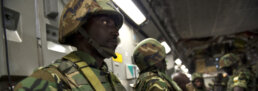
Today, MINUSCA is stretched very thin. Having been to CAR myself, the weary exhausted faces of some of the UN troops is a sight I will not soon forget. As of January, there are 11, 165 UN contingent troops tasked with the protection of roughly 4.6 million people. The peacekeepers are not always warmly received by the locals. This is for a variety of reasons including damaging acts of sexual exploitation allegedly committed by peacekeepers.
Currently 2.9 million people are in desperate need of humanitarian aid. According to the UN, one in two people does not have access to safe drinking water and by January this year, more than 648,000 people were internally displaced with an additional 575,000 refugees registered in neighbouring countries.
CAR also has the highest number of attacks against aid workers. According to Foreign Policy more aid workers are targeted in CAR than in Iraq, Afghanistan, Somalia and Syria.
Fueling the conflict is the blessing-turned-curse of mineral wealth as rebel groups fight each other for access to mines, key transport routes and markets for the vast amounts of gold, diamonds, and copper to name but a few of the precious minerals in CAR. Writers, B.Koura and M.Eckel aptly described CAR as “less a country than a collection of fiefdoms, ruled by gang-like armed groups, where religious, military, political and ethnic factions struggle for anything that might yield revenue.”
The UN Secretary General called the February peace accord an “important milestone towards a durable political solution for the Central African Republic” hopefully it will truly lead to fundamental change as the people of CAR are in need of peace and stability.
**This article appeared in the Star Newspaper on 28 February 2019

The Gbagbo acquittal
Last week the International Criminal Court (ICC) acquitted Laurent Gbagbo and Charles Blé Goudé from all charges of crimes against humanity allegedly committed in Côte d'Ivoire in 2010/ 2011, a devastating blow to the victims and prosecution witnesses. It has given the Court’s critics ammunition to further discredit the institution as they view acquittals as a failure of the Court as a whole.
However, two factors seem to be neglected in this generally myopic criticism: 1) acquittals are an important part of every criminal justice system and; 2) one needs to distinguish between the organs of the Court and their respective roles. Acquittals are not a failure of the Court as a whole.
The ICC has four organs, the Office of the Prosecutor (OTP), the Registry, the Presidency and the Judicial Divisions. To say that Gbagbo’s acquittal is a failure of the Court is in accurate and completely ignores that the Court has four distinct organs.
The Prosecutor is mandated to examine situations under the Court’s jurisdiction “where genocide, crimes against humanity, war crimes and aggression appear to have been committed, and to carry out investigations and prosecutions against the individuals who are allegedly most responsible for those crimes”.
The Registry, is the neutral organ of the Court and it provides a variety of services to other organs including management of court records. The Presidency, which includes the President and the first and second vice who are also judges of the Court, has responsibilities that can be judicial or administrative in nature.
Finally, the Judicial Divisions, of which there are three, is where the judges hear matters at different stages of the proceedings: Pre-Trial, Trial and Appeals. It is two of the three judges of Trial Chamber 1 who saw fit to acquit Gbagbo and Blé Goudé.
Acquittals are a truly disappointing outcome for the victims and prosecution witnesses who have endured a great deal to bring the perpetrated crimes to light. In this case, Gbagbo, former president of Côte d'Ivoire, and Blé Goudé’s (who has been called the “architect of all pro-Gbagbo demonstrations” and who served as the Minister of Youth at the time) alleged crimes stem from the post-election violence that occurred after Gbagbo refused to concede defeat to Alassane Ouattara.
Gbagbo and Blé Goudé were charged with crimes against humanity including murder, rape and persecution. 3000 people reportedly died during the 2010/2011 post-election violence, and 500 000 were displaced. The post-election violence is still being investigated by the OTP despite the acquittals as violence was attributed to both sides of the political divide.
The plight of victims will never be forgotten and should never be undermined by criminal justice proceedings but acquittals remain an integral part of any criminal justice system be it domestic, or international.
At the ICC, the judges bear the responsibility to assess the veracity of the evidence brought before them and to make a just ruling. In this instance they were of the opinion that the OTP had failed to prove its case. This serves as a reminder that the ICC as a whole is not on a witch-hunt and is not hell-bent on convictions at all costs. Although, a full written judgment is yet to be released, this acquittal could speak to the impartiality of the judges of the Court if it is based on a sound interpretation of the law.
This acquittal unfortunately reflects badly on the OTP as it regrettably, and according to the ICC judges, signals the OTP’s failure to bring sufficient evidence “to satisfy the burden of proof to the requisite standard”. Gbagbo’s acquittal, like that of Jean Pierre Bemba (former vice-president of the Democratic Republic of Congo (DRC)), is significant in that it has led pundits to question whether the OTP is indeed equipped to successfully prosecute high-level suspected perpetrators.
The OTP has thus far secured three convictions, Thomas Lubanga and Germain Katanga of the DRC and Mali’s Al Mahdi. If the acquittals of Gbagbo and Blé Goudé are upheld on appeal, the OTP’s statistical record would reflect more “losses” than “victories”, if we consider convictions to be the ultimate measure of “victory” from the OTP’s perspective.
That being said, the collapse of cases is not always the OTP’s fault and the challenges that the OTP faces cannot go unmentioned. The Office is hampered by a severe lack of financial and human resources, as noted in the Prosecutors repeated plea for additional resources before the Assembly of States Parties. Other challenges include inconsistent and insufficient cooperation from states, political interference including witness tampering, as seen in the Kenya cases, and a lack of support from bodies like the United Nations Security Council.
The OTP has an overwhelming and deeply challenging mandate and hopefully lessons will be learnt from this acquittal with regard to enhancing prosecution case building. Although the OTP has faced many challenges it has also provided hope for victims of egregious crimes that their suffering will not go unnoticed. If the acquittal is upheld on appeal with sound legal reasoning, let it not dampen the spirits of all of those who believe in the impartiality of judges, justice, accountability and the deterrent effect of organs like the OTP.
**This article first appeared in the Star Newspaper on 24 January 2019.
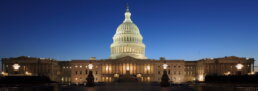
Diversity reigns: the women of the 116th US Congress
There is very little good news coming out of the US these days and US leadership (in the form of the current president and his supporters) is exhibiting deep and vexing shades of racism, bigotry, misogyny and xenophobia. However, the swearing into office of the nation’s most diverse Congress in the history of the country is undoubtedly cause for celebration. The 116th US Congress has a record 102 women forming 23% of Congress. Although there are limits to what one person can achieve in Congress, this is an unprecedented moment that could signal a progressive and positive shift in American politics at a time when such a shift is essential.
The US Congress is the bicameral legislature and it consists of two houses: the House of Representatives and the Senate. Needless to say, events in Congress have a significant impact on domestic and foreign policy and therefore its office holders bear the weight of power and responsibility bestowed upon them by their voters. The 116th Congress not only includes more women than ever before, but it includes all sorts of women-women of colour, women from different cultural and religious backgrounds and women of different ages.
50 years after Shirley Chisholm, teacher and politician, became the first black woman elected to the House of Representatives in 1968, the US Congress, for the first time ever has over 20 black women. Amongst them is 44 year old Ayanna Pressley who is the first black Congresswoman from Massachusetts. Pressley is a survivor of child sexual abuse, a staunch advocate for justice, equality, the empowerment of women and upliftment of oppressed communities.
She is joined by another black woman, also a trailblazer in her district, Jahana Hayes who is Connecticut’s first black Congresswoman. A teacher by profession, Hayes believes in robust civic education and access to pre-kindergarten programs for all children in the US.
Breaking ground for other minorities are Sylvia Garcia and Veronica Escobar who are the first Latina Congresswomen from Texas, and Deb Haaland and Sharice Davids who are the first Native American women to make it to Congress.
Davids is a lawyer, a former mixed martial artist and is passionate about equity and representing all communities. She is also openly lesbian. Many view this as a significant milestone for the LGBT community which faces increasing discrimination.
According to an advocacy group, Human Rights Campaign, in 2017 an estimated 120 bills distinct for their anti-LGBT provisions were introduced in 30 states on matters ranging from the adoption of children to a Mississippi law allowing state employees and private businesses to deny services to the LGBT community on the basis of religious objection. Although what happens at the state level is separate from Congress, this example displays the importance of having representatives who care about the rights of the LGBT community.
The list of impressive pioneers continues with 29-year-old Alexandria Ocasio-Cortez, who hails from the Bronx in New York and made history by becoming the youngest woman ever elected to Congress. Ocasio-Cortez is known for her recognition of climate change and the need to act including pushing for a 100% transition to renewable energy.
Whilst the aforementioned women have truly remarkable biographies, and compelling stories that have made them who they are today, the one who stands out the most in the current American political climate is Ilhan Omar.
Omar is one of the first Muslim women in Congress and the first Somali-American refugee to take a seat in US Congress’s Capitol Building. Omar arrived in America 23 years ago as a Somali refugee fleeing the war and spent 4 years, from ages 8 to 12, in a refugee camp waiting to be relocated to the US. Now, as a member of the Democratic Party, Omar represents Minnesota’s 5th Congressional District.
Omar stands for everything that the current US president has sought to undermine and belittle-women, Muslims and refugees. She embodies hope for all of these people and speaks boldly about, “rejecting the politics of fear and divisiveness.” Omar seeks to encourage America to be inclusive and open and stands in support of the rights of the LGBT community, amongst other causes.
Omar is not the only Muslim woman in Congress, as Rashida Tlaib is also a Muslim and the first Palestinian-American woman to don the title of Congresswoman. She supports the abolishment of the US Immigration Customs Enforcement, and champions the protection of civil rights.
It seems like these are all impressive, visionary politicians seeking to make a change. It remains to be seen how they will fare, but it is safe to say that their personal histories, individuality, aspirations and hopes for a just and tolerant society have already inspired many.
These women are standing in the glow of a momentous time in history but as usual, “the proof is in the pudding” and they have much work ahead. Hopefully, they will live up to the vision they have all eloquently articulated and deliver on promises made. May their election truly embody the words of America’s first black Congresswoman, Chisholm who said, "my presence before you symbolizes a new era in American political history.”
**This article appeared first in the Star Newspaper on 10 January 2019.

Ending sexual violence - we must all act
The 16 Days of Activism against Gender-Based Violence Campaign ran from 25 November to 10 December and it is designed to raise awareness and spur institutions, governments, ordinary citizens into action to bring an end to violence against women and girls. Campaigns of this nature remain vital especially when the perpetrators of sexual violence know no restraint. According to the UN, over the course of 12 days this month, coinciding with the 16 days of Activism, 150 women and girls were raped in the north of South Sudan.
South Sudan gained independence from Sudan in 2011 and shortly after the young nation was engulfed in violence as the government forces, opposition forces and multiple militia groups, battled for control and power.
To date, an estimated 400 000 people have been killed and 2 million displaced since the conflict began. Grave war crimes and crimes against humanity continue to be perpetrated and sexual violence remains alarmingly prevalent.
Between 22 November and 4 December, 150 women and girls sought medical attention after being sexually violated near the northern city of Bentiu, a government-controlled area.
According to the survivors, many of the perpetrators wore government issued military uniforms. The women and girls were mostly targeted whilst on route to emergency food distribution centres where their attackers lay in wait.
The Washington Post reports that by mid 2018 an estimated 2300 cases of sexual violence were reported to aid groups in South Sudan and that 20 percent of the victims were children, some of them under the age of 10. Aid workers report that even pregnant women and the elderly have been attacked.
These are just the cases that have been reported. Sexual violence is heavily underreported making it very difficult to determine how many women and girls have suffered at the hands of perpetrators who seem to thrive in an environment of impunity. Rape is being used as a tool of war by all sides of the conflict.
According to the Commission on Human Rights in South Sudan, violations include mutilation of sexual organs, rape, gang rape, and other acts of sexual violence primarily committed in front of the victim’s community in order to cause humiliation. Other organisations report that sexual slavery is widespread, and that men are sometimes forced to rape their female relatives.
In many communities, survivors are shamed into silence and wives are shunned by their husbands and families due to the stigma surrounding rape and sexual violence. In some instances, women and girls have been ordered to marry their attackers as per decisions made by traditional dispute resolution mechanisms.
The UN has condemned the attacks near Bentiu and called on local government authorities to act, conduct investigations and bring the perpetrators to account. They are not the only ones calling for accountability to combat the scourge of sexual violence in South Sudan.
Non-profit think tank, Legal Action Worldwide (LAW), lodged a case against the Government of South Sudan with the UN Committee on the Elimination of all Forms of Discrimination Against Women (CEDAW) in Geneva.
They are representing 30 women and girls who were sexually violated by government forces including the People's Defence Forces (SSPDF) and formerly the Sudan People’s Liberation Army (SPLA) and the Presidential Guard. The women and girls were subjected to sexual violence, sexual slavery, sexual torture, rape and gang rape during attacks on their villages between June 2016 and September 2017.
According to LAW, one of the victims was 12 years old when she was raped, another was 42 when she was gang raped by soldiers whilst “another soldier blew a whistle indicating when the perpetrators should finish.”
The South Sudanese government has responded to the allegations by saying that LAW is seeking to destabilise the country and alleging that they have a hidden agenda.
During these 16 days of Activism, my articles have been centered around sexual harassment and sexual violence including the recent scandal at the African Union. Even as the 16 days of activism come to an end, continuing to raise awareness about the rampant and wanton commission of sexual violence remains at the forefront of my mind.
Last week I walked into a restaurant in the Hague and sitting at a table next to mine was none other than Nobel Laureate Dr. Denis Mukwege whom I wrote about here. My fortuitous encounter and brief discussion with Mukwege served as affirmation of the importance of keeping this issue in the public domain.
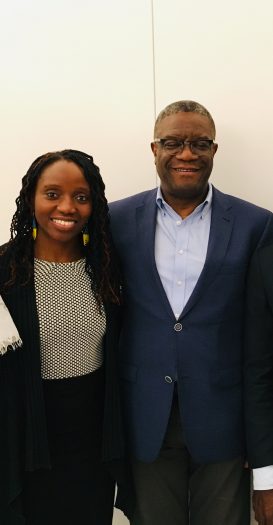
Mukwege is the surgeon from the Democratic Republic of Congo who has dedicated his life to medically and surgically assisting survivors of brutal sexual violence, restoring their dignity and reminding them that they have not been forgotten.
It is activists like Mukwege who inspire and led by example, reminding us all to head the call of South Africa’s, Phumzile Mlambo-Ngcuka, head of the UN Entity for Gender Equality and the Empowerment of Women, (UN Women), that it is time “to band together and take a stand on the changes that must happen so that girls and women are heard and their experiences are taken seriously.
**This article appeared first in the Star Newspaper on 13 December 2018

Sexual harassment scandal at the African Union
The treatment of women in society remains a necessary topic of discussion more so after last week’s disturbing report about the prevalence of bias against women, and sexual harassment at the African Union Commission,(AUC) the AU’s secretariat. The AU and its Commission, institutions that were designed to foster development and progress in Africa, are hardly leading by example when it comes to equality and fairness as women are still being treated like second class citizens unworthy of the respect enjoyed by their male peers.
In May, unnamed sources leaked an internal memorandum to news outlets prompting the AUC Chair, Moussa Faki Mahamat to launch an inquiry, led by an appointed High Level Committee. The outcome of this inquiry was made public last week.
One of the confidential documents leaked, was a memorandum addressed to the AUC Chair stating that ,“we, female employees of the AU Commission, are totally appalled by the entrenchment of professional apartheid against female employees in the commission.” It was endorsed by 37 women. It appears that women have been denied promotions, discouraged and prevented from taking up leadership roles, whilst the perpetrators of such discrimination go unchecked.
The problem appears to be at its worst within the AU Peace and Security division. According to another memorandum dated 14 February, the Peace and Security division is “too male-heavy in the upper layers”. The head of the division, Commissioner Smaïl Chergui, (an Algerian diplomat elected in 2013) stands accused of nepotism, gender bias, and abuse of office including interfering in the selection process. Speaking anonymously, senior AU officials told the Mail and Guardian newspaper that, “Chergui has got rid of senior women. He has hounded them out.”
Another official stated that, “there has been a systematic exit of the highest calibre of women from the Commission...” Chergui denied the allegations when they surfaced in May.
To make matters worse, women are also being subjected to sexual harassment. The AU’s inquiry revealed that younger women, in particular, interns, volunteers and short-term contract holders have been offered jobs or further opportunities to stay within the AU in exchange for sexual favours. Many of these incidents go unreported for fear of reprisal and also because the AU Commission has, by its own admission, no sexual harassment policy in which complaints could be dealt with. Therefore, there exists no platform or vehicle for redress or protection for the complainants.
Vested with the responsibility to promote peace, security, and equality, across Africa, it is inconceivable that so many years after its founding, and with all that has been said about zero-tolerance for sexual and gender-based violence, a regional organisation that wields so much influence, would not have an in-house policy to deal with sexual harassment.
Statistics from the World Health Organisation state that 1 in 3 women in the world experiences physical and/or sexual violence or harassment in her lifetime. Not only is it a human rights violation but it is also a genuine public health problem, and more has to be done to punish perpetrators, prevent abuses and to promote and protect the rights of women. Organizations like the AU should be at the forefront of the fight for gender equality.
AUC Chair Mahamat, has rightly promised to resolve the situation and has reiterated his zero-tolerance policy to gender discrimination but there is much work to be done to ensure that the AU does more than pay mere lip service to its 2009 Gender Policy which includes a commitment to gender equality.
Recently, the AU’s host nation, Ethiopia, has undertaken key initiatives that will hopefully encourage and inspire change in other African countries on issues of gender. Ethiopian Prime Minister Abiy Ahmed made headlines with his proactive approach to affirming women as leaders including, the appointment of modern Ethiopia’s first female president, Sahle-Work Zewde. Although the position is largely ceremonial, in the male dominated, patriarchal society, plagued by high levels of violence and discrimination against women, it is deeply significant and timely.
Ethiopia also now boasts its first female chief justice, Meaza Ashenafi who was appointed on 1 November.In addition, a cabinet reshuffle has changed the face of Ethiopian politics, with equal representation of women and men for the first time. Women have been appointed to hold powerful portfolios like ministry of defence and ministry of peace.
These changes come a few years after a 2013 Ethiopian government report stated that as much as 50-60 percent of Ethiopian women have experienced domestic violence attributing this to the “low level of status given to women in society coupled with the dominant position of men.”
Change is afoot in Ethiopia, presenting a salutary lesson to the AU and other traditionally patriarchal institutions - a lesson which it would do well to learn. The world has just marked International Day for the Elimination of Violence Against Women on 25 November and the commencement of 16 Days of activism against gender-based violence, the AU needs to show commitment, direction and take principled action to eliminate discrimination. Anything less, would be an abdication of its duty and a failure to adhere to its own tenets.
**This article appeared in the Star Newspaper on 29 November 2018

Racism and football-when will it end?
Only 4 months ago France celebrated its World Cup victory and the well intentioned, often jocular, yet deeply political comments about the “6th African team” winning became a hot topic. It conjured discussions about racism, origins and integration and the recent racial profiling scandal at top flight French football club Paris Saint-Germain (PSG) has reignited this discourse.
PSG is one of France’s biggest football clubs having won the French league (Ligue 1) 7 times and the Coupe de France a record 12 times. PSG has the sixth-highest revenue in the footballing world with an annual revenue of €486.2m, to boot they are the world's eleventh most valuable football club, worth €775m.
French investigative website, Mediapart, uncovered that the Club’s Youth Academy scouts have been illegally racially profiling young players and discarding them on the basis of their skin colour for the past 5 years. The scouts were using forms containing certain criteria including whether the player was “French, North African, black African or West Indian.”
PSG’s management team confirmed “that forms with illegal content were used between 2013 and 2018” but they remain adamant that this was done solely by the erstwhile head of scouting, Marc Westerloppe and that they had no actual knowledge of this discriminatory practice or of the forms themselves. In addition to the forms, Marc Westerloppe was reportedly recorded complaining about the number of West Indians and Africans in Paris.
Under French law the collection of data related to race, ethnicity or religion is strictly prohibited and racial profiling is punishable by up to five years in prison and a 300,000 euro fine. The French League for Human Rights has filed a lawsuit against the Club.
This is not the first time that allegations of racism have surfaced in the world of French football. In 2011, in yet another scandal uncovered by Mediapart, former national coach Laurent Blanc was recorded discussing quotas to limit the number of players with African origins in youth academies. Ideas included ensuring that 70 percent of the players were white.
A transcript of his conversations records him uttering his preference for players with “our culture, our history”. Blanc claimed to have been quoted out of context and was eventually cleared of any wrong doing but the scandal left a bitter taste in everyone’s mouth. The notion of introducing such quotas is tragically myopic and almost ironic given that both the French teams that have won the World Cup (1998 and 2018 respectively) were highly diverse and included a number of players with an immigration background.
Racism in French football is not just at the recruitment level but football fans in French stadiums have been amongst some of the chief instigators of discriminatory behaviour.
In 2007, Boubacar Kebe, a Burkinabé-Malian player with French citizenship was racially abused by fans of the French club Bastia. The abuse escalated the following year in 2008 when Bastia fans brought and displayed a racist banner targeting Kebe yet again. Ligue 1 deducted two log points from the club. In January 2017, Italian striker, Mario Balotelli, whose parents both come from Ghana, was also subjected to racial abuse by Bastia fans who made monkey sounds whenever he touched the ball.
Amateur players say the racism at that level is worse than that of the professional level. Kerfalla Sissoko a 25-year-old amateur player from Guinea was violently beaten in May this year after being subject to verbal racial abuse during a match in Mackenheim, France. During the match he and some of his black team mates were verbally abused by fans and opposing players. When a fight broke out between players on the pitch, he tried to return to the locker rooms but was prevented by players and fans, including one brandishing a knife. He was badly beaten and suffered a broken cheekbone.
Central to the issue is blind and unflinching intolerance to diversity, but former French national defender, Lilian Thuram, also thinks the problem is the French pretense that they are “colour blind” making it virtually impossible to discuss racism in France.
Thuram blames local authorities who frequently refuse to acknowledge that racism even exists. As reported by the New York Times, Sissoko’s assault was not classified as racially motivated by the local football officials in the area.
Criticism of inadequate responses to racism go all the way to the governing body FIFA. In June this year, FIFA fined an England player 16 000 pounds for sipping an energy drink that was not the official sponsor of last years Under 20 World Cup. The sanction was only 6000 pounds less than Russia’s 22 000 pounds fine for the racial abuse of black French players during an international friendly in March this year. FIFA proclaims that it has a zero-tolerance policy towards racism but are they really leading by example? Domestically, is docking league points sufficient?
Depending on the outcome of investigations in the PSG saga this could be a crucial opportunity for French officials to set an example and send a strong message that racism will no longer taint and disgrace French football.
**This article appeared in Voice360 and the Star Newspaper on 15 November 2018

Philanthropy gone horribly wrong- sexual abuse in Liberia
A few weeks ago,American founder Katie Meyler temporarily stepped down as CEO of the organisation More than Me (MTM).MTM is a charity registered in the US with operations in Liberia. It was designed to empower young girls in Liberia and provide them with access to education and save them from a life of sexual exploitation. What was meant to be a safe haven and a positive influence for the girls of the township of West Point, Monrovia, turned to be the source of their abuse as co-founder Macintosh Johnson repeatedly raped an estimated 30 girls, all between the ages of 11 and 16.
Meyler first arrived in Liberia as an intern volunteering with an evangelical charity. Inspired by the girls she met there she decided to save them from a life of exchanging sex for: food; water; and money. Her nobel objectives began to bear fruit when her scholarship programme was established and as the project developed they managed to open their very own MTM Academy in 2013. They were educating an estimated 150 girls. Meyler’s ability to fundraise, and dedication to her work saw her raise millions. She was named one of Time Magazine’s People of the Year for her attempts to assist victims of Ebola.
But all that glitters is not gold.
Meyler’s decision making, judgement and lack of qualifications would ultimately jeopardise what she sought to achieve.
Johnson, MTM’s Liberian co-founder, was left in charge of the recruitment process. According to investigations conducted by ProRepublica, an independent, non-profit investigative journalism outfit, Johnson’s became quite powerful in this small community as many saw him as the gateway to a scholarship.
Johnson used his power and influence to take advantage of already vulnerable children. In 2014 Johnson was charged with the rapes of only 10 girls, despite there being indications that there were many more victims.
The abuse came to light when one of the victims went to see the school nurse, Iris Mator. Judging by the symptoms, Mator, could tell that the young 13 year old had a sexually transmitted infection.
When probed as to who she was having sex with, the girl indicated that it was Johnson.
In a short documentary called “Unprotected”, produced by ProRepulica, and containing interviews from former staff members and students, Mator states that she could not immediately tell anybody as Johnson and Meyler were reportedly in an intimate relationship at the time. Mator feared for her safety, her job, and wondered whether Katie would “stand up for the girls, or stand up for her boyfriend.”
5 months later Mator reported to Program Director, Michelle Spada. After consulting the Board, Spada reported the story to the police and Johnson was arrested. After a mistrial, Johnson’s case was scheduled to be heard again but he died in prison of AIDS related complications in 2016. One of his victims also tested HIV positive.
A key component of the mistrial, according to ProRepulica, was that neither Spada nor Meyler testified in court despite Spada being listed as the main complainant.
According to phone records, Meyler remained in close communication with Johnson even during his incarceration. To make matters worse, some former members of the team say that Meyler, had previously heard rumours of Johnson having sex with young children before he became the co-founder.
The blatant violation of already vulnerable girls is beyond mortifying but the added dimension is the so called, “White saviour industrial complex” as highlighted by writers like Teju Cole.
Writer, Abigail Higgins describes the turn of events at MTM as “emblematic of a larger rot within a sector of American philanthropy: the fetishization of young and inexperienced do-gooders setting out to change developing countries, regardless of whether they are qualified to do so.”
This ”White saviour industrial complex”, explains how Meyer went from 26 year old intern to a CEO who had managed to raise $8 million, open 19 schools in total and reportedly educate over 4000 students all without the necessary qualifications or experience.
According to reports, when Meyler started the organisation she had no experience in education or management. Her Board consisted mostly of American entrepreneurs who also had no experience with girls education or any knowledge about how best to work with vulnerable communities.
According to ProPublica, the initial batch of teachers recruited from the US were fellows and no prior teaching experience was required to full a majority of the posts.
There is no doubt that Meyler has changed the lives of many young girls and given them the gift of education but pressing concerns about well-intentioned yet unqualified philanthropists and “activists” who do not do their due diligence remain.
The lack of qualifications all round and the problematic emotional connection between the two founders is compounded by the fact that, in the beginning of the project, Meyler reportedly only spent 2 months a year in Liberia spending the rest of the time fundraising in US. Meanwhile, Johnson was running the show in West Point and violating students. All of these factors paint a vivid and disturbing picture of how irresponsibly the charity was run.
Even in the most rigorously regulated institutions run by qualified professionals, something of this nature could still happen but all the more reason to have qualified professionals and effective oversight mechanisms.
As stated by Higgins, it is most unsettling that virtually no one questioned “whether a young American woman with no experience in education or health was qualified to be running a school.”
The required scrutiny has finally materialised. MTM has other woes including allegedly filing inaccurate tax returns, and operating with expired Liberian accreditation. A local Liberian Board has been established and an independent multi-party investigation is underway, this is what has prompted Meyler’s temporary resignation an entire 4 years after the abuse was reported. Hopefully those who were complicit will be held to account and the all the girls will continue to have access to education.
**A version of this article appeared in the Star Newspaper on 1 November 2018