Forced to marry at 16, raped and sentenced to death
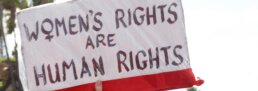
Earlier this month a Sudanese court sentenced 19 year old, Noura Hussein, to death. Her crime - killing a man in self-defence. This man, was the man she was forced to marry when she was 16, he was also the man who had reportedly raped her with the help of his cousins and brother. At the core of this devastating story is one important issue: women’s rights, or the lack thereof in this instance. The failure to acknowledge women’s rights is blatantly manifest in: the continued practice of forced child marriages; the societal and legal norms that dismally fail to acknowledge marital rape and; the failure to consider and give due weight to all of these factors in cases such as Noura’s.
According to Amnesty International, Noura was forced to marry Abdulrahman Mohamed Hammad by her father and the first step of this marriage was a contract signed between the two men. She was allowed to complete high school and then was forced to move in with her new husband.
Noura reportedly refused to consummate the marriage which led to rape on 2 May 2017. Abdulrahman asked his brother and two of his male cousins to hold Noura down while he raped her. When Abdulrahman tried to do this again the next day Noura managed to run to the kitchen where she defended herself with a knife. As Noura and Abdulrahman fought, Abdulrahman was fatally injured.
Noura sought refuge with her own family and they turned her into the police. She stood trial in July 2017 and on 29 April this year she was convicted of murder and later sentenced to death in terms of the 1991 Criminal Act.
Forced child marriages are a violation of human rights and have devastating consequences for the girls who are forced to become mothers and wives at a very young age. The United Nations estimates that worldwide, every year, 14 million girls are forced to marry under the age of 18. The global coalition Girls Not Brides estimates that more than 650 million women alive today were forced into marriage as children. Countries with highest percentage of women who were married before the age of 18 include, Niger, 75%, Chad 72%, Mali 71%, Bangladesh 64%, Guinea 63%, Central African Republic 61%. In Sudan, children over the age of 10 are allowed to be married.
The consequences of forced marriage for girls and young women are grave. Many of them do not complete their high school education due to the marriage, that is if they were lucky enough to have had a family that deemed it cost-effective to educate a girl who will never have a career as she can only ever be someone’s wife and mother.
Young brides are also frequently subjected to domestic violence and abuse as they are deemed to be their husbands property. As in Noura’s case, women go from “belonging” to their fathers to “belonging” to their husbands. They have little or no autonomy, they, in many cases, lose the support of their own families, and benefit from no protection from a legal system that castigates them as second class citizens.
As if being forced into a marriage was not bad enough, the fact that many countries do not recognise marital rape adds insult to injury and is yet another example the poor state of women’s rights. In several countries, Sudan included, there is no such thing as marital rape. Once a woman is married it is assumed that consent to sexual activity has been given on a permanent basis and is non-retractable. This leads to the dehumanisation of women as their autonomy and power to say ‘yes’ or ‘no’ to sexual intimacy is unduly, and unfairly stripped away. According to the UN Declaration on the Elimination of Violence against Women “violence against women shall be understood to encompass, but not be limited to...marital rape… “ Perpetual consent by virtue of marriage simply cannot and should not be assumed.
In addition to facing high rates of domestic violence and rape, child brides are expected to bear children almost immediately. The rate of childbirth related deaths amongst child brides is high, the UN estimates that 70,000 young brides die on an annual basis due to pregnancy or childbirth related complications. Not only is the mother at risk but so is her infant. UNICEF estimates that children born to mothers under the age of 18 have a 60% higher chance of dying in their first year than children born to mothers over the age of 19.
The challenges faced by child brides are immense. Noura’s story is unfortunately too common and it is unconscionable that girls are forced into marriage, raped by their husbands and abandoned by their families and their legislators, policy makers and communities are doing nothing to protect them.
**This article appeared in the Star newspaper on 24 May 2018


How long can such discriminatory, archaic perspectives prevail?
The film, Rafiki, set to feature at the Cannes Film Festival this week, is already making waves, not only because it is the first Kenyan film to make it to the prestigious and exclusive Cannes Film Festival, but also because it has been banned in Kenya.
Rafiki- meaning “friend” in Kiswahili, features a love story between two female leads, a story line that has attracted the censure of the Kenyan Film Classification Board (KFBC) who banned the film on 27 April. The banning of the movie highlights the extent of the discrimination based on sexual orientation and the plight of the gay and lesbian people in Kenya.
KFCB, banned the distribution, exhibition or broadcast of the movie due to its “ homosexual theme and clear intent to promote lesbianism in Kenya contrary to the law.” The KFBC went on to say that anyone found in possession of the film would be in “breach of the law”. Citing that Kenyan values, morals and cultural beliefs were contrary to homosexuality, the KFBC made their disdain for the film emphatically clear in their statement.
This stance goes all the way to the President's office as President Uhuru Kenyatta, who was interviewed last month on CNN by Christiane Amanpour unequivocally confirmed that the topic of homosexuality was of “no importance to the people of Kenya” and that is was not “an issue of human rights” but more about “culture”. Whilst he could affirm that no Kenyan should be abused or violated in any way he stood firmly in support of the homophobic stance he deemed to be the opinion of “99 percent” of the Kenyan population.
Kenya's laws against homosexuality are essentially the remanents of British colonial rule. Section 162 and 165 of the Kenyan Penal Code criminalises “carnal knowledge against the order of nature” and this has been interpreted and understood to proscribe and forbid homosexuality. The maximum penalty for engaging in same sex relations is 14 years imprisonment.
Whilst there are many dubious colonial legal exports that still confuse the legal landscape in many African countries and remain unchanged by African legislators and policy makers- criminalising private, consensual same sex conduct ranks as one of the most destructive in a world where the fight for equality for all continues.
In 2015, two men were arrested under suspicion that they were engaging in same sex relations and “indecent acts between adults” which is an offense in terms of Kenya’s Sexual Offences Act. The two men were forced to have anal examinations, as the authorities were of the opinion that this would provide evidence of their alleged sexual conduct. The two men were also subjected to HIV and Hepatitis B tests. This cruel and degrading treatment became the subject of litigation as the National Gay and Lesbian Human Rights Commission (NGLHRC) and the two men challenged the constitutionality of the forced examinations and testing. The Kenyan Mombasa High Court ruled in June 2016 that the forced anal examinations and testing were constitutional.
Thankfully, the 2016 ruling was overturned earlier this year in March by the Appeals Court. The Appeals Court ruled that conducting forced anal examinations was unconstitutional. Forced anal examinations have been denounced by several international organisations including the World Medical Association which in October 2017 adopted a resolution to that effect and called for an end to the practice.
Lesbian and gay people have also been subjected to other restrictions including government agencies denying organisations that represent the Lesbian Gay Bisexual Transgender (LGBT) community registration and thus preventing them from operating in a legal manner. This was successfully challenged in court in 2015 and two organisations were allowed to register.
In addition to having to contend with the full weight of the discriminatory laws and the government’s disapproval of same sex relations, the LGBT community, in many parts of Kenya faces the wrath of neighbors and the community at large.
In 2015, Human Rights Watch, in conjunction with local Kenyan organisations interviewed 65 gay and bisexual men, lesbians, transgender women, and documented reports of community violence against them in coastal towns of Diani and Ukunda. In one incident, photos and video footage showing men engaged in same sex conduct were distributed on social media and the members of the public took it upon themselves to hunt down those depicted in the footage. Some of the men who were attacked feared reporting the attacks to the police as they felt that they would be further brutalised and castigated. Even the health workers who provide healthcare for LGBT people have also been attacked and severely criticised.
The reasons submitted for the banning of the Rafiki, clearly epitomize the attitude that seems to permeate several layers of Kenyan society. How long will such discriminatory, non-inclusive and archaic perspectives prevail?
** This article appeared in the Star Newspaper on Thursday 10 May 2018
Remembering anti-apartheid hero O.R Tambo
24 April marked the 25th anniversary of Oliver Reginald Kaizana Tambo’s death. Tambo was
anti-apartheid activist, politician and revolutionary who served at the helm of the African
National Congress (ANC) from 1967 to 1991. 25 years since his death, his contribution to a
free democratic South Africa founded on the principle of equality remains invaluable.
Tambo began his political activism during his undergraduate studies at Fort Hare University
where he met Nelson Mandela. In his “Long Walk to Freedom” Mandela describes being
impressed by Tambo’s “thoughtful intelligence and sharp debating skills.” It was also at Fort
Hare, where Tambo experienced the cost of taking a stand against injustice and inequality.
Tambo was an active student leader and this activism eventually led to his expulsion from
the University.
In 1942 he was forced to return to Johannesburg where he taught science and mathematics
at St Peters, the school where had he had, years earlier, completed his high school
education. This would prove to instrumental as it was in Johannesburg where Tambo
immersed himself in the ANC and its development. He was one of the founding members of
the ANC Youth League and became its first National Secretary.
The ANC, accredits him and few others with promoting a new militant strategy to challenge
the brutality of apartheid. Tambo and others in the Youth League, took the ANC from
petitions and protests to acts of civil disobedience, strikes and non-cooperation in the fight
against apartheid. Whilst many ANC members advocated for a non-violent approach, others
saw it as the only way to release the yoke of oppression. This divide between non-violence
and fighting fire with fire, is a common feature of all liberation and equality movements
across the world, and the ANC and its members were no exception.
Having studied law by correspondence, Tambo was not only a pioneer in the ranks of the
Party but he was also a legal pioneer as Mandela and him opened one of the first black
owned law firms in South Africa in 1952. Working out of small, shabby office (typical of the
spaces black South Africans were allowed to inhabit by order of the apartheid government)
the firm “Mandela and Tambo Attorneys” served the black community and helped them take
necessary legal action against their oppressors.
They were inundated with people in need, and they worked tirelessly to help as many as they
could. To many black South Africans, the law firm was the only place they could receive
genuine assistance and have their grievances heard. It was a place where they were treated
fairly and with kindness and dignity – an all too rare occurrence in the lives of the average
black person during the days of apartheid. “Mandela and Tambo Attorneys” also generated a
great deal of pride as clients were proud of being represented by a fellow black person and
inspired to see two young black lawyers fighting for a just cause in an unjust society.
Tambo continued to rise in the ranks of the ANC and by 1958 he was Deputy President of
the ANC. Having been identified by the apartheid government as a threat and one of the
defiant leaders of the anti-apartheid movement, Tambo, began to fear for his life and ended
up in exile in 1959. Tambo took this as an opportunity to fight against apartheid from the
outside by galvanising international and regional support for the ANC.
In 1967 Tambo became Acting President of the ANC filling the shoes of Albert Luthuli who
had died in an accident. Tambo was elected president in 1969 and again in 1985. He
travelled extensively, raising the international status of the ANC and not only keeping the
international community abreast of the situation South Africa, but encouraging them to
proactively fight against apartheid.
Tambo was also known as a strong proponent of women's rights. He stood for the
emancipation of women and affirmed and encouraged their participation in politics and in all
spheres of life.
The ANC attributes him with the transformation of the party from “a liberal-constitutionalist
organisation to a radical national liberation movement”. After over 30 years in exile and a
after suffering a severe stroke Tambo was finally able to return to South Africa in 1991.
Tambo died from a heart attack on 24 April 1993, 14 days after the assassination of Chris
Hani, and 2 days before he could bear witness to South Africa’s first democratic election.
He is fondly remembered and deeply respected for his wisdom, passion and contribution to a
non-racial, non-sexist, democratic South Africa. His life and legacy continue to remind us all
that it is, “Our responsibility to break down barriers of division and create a country where
there will be neither Whites nor Blacks, just South Africans, free and united in diversity.”
**This article appeared in the Star Newspaper on 25 April 2018
Assassination April
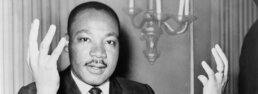
The assassination of prominent individuals agitating for positive change has left an indelible mark on the struggle for equality and human rights. As fate would have it, a few of the most influential and iconic advocates for human rights were murdered in the month of April- Chris Hani, Martin Luther King Jr and Abraham Lincoln were all shot and killed in April. Although their alleged killers were found, conspiracy theories remain about who was truly behind their deaths.
Lincoln was the 16th President of the United States known for leading the Union through the American Civil War, but most importantly for abolishing slavery in 1863. Lincoln was by no means a saint and like all these April martyrs he had his shortcomings.
Lincoln was assassinated by John Wilkes Booth, on 15 April 1865. Booth allegedly opposed his abolition of slavery and abhorred everything Lincoln stood for. Historians agree that Booth did not act alone but the list of his alleged co-conspirators includes the Roman Catholic Church and Lincoln's vice president at the time, Andrew Johnson. Lincoln's wife Mary Todd Lincoln was particularly suspicious of Johnson.
The abolition of slavery in 1865 was just the beginning. African Americans were no longer slaves, but they were far from being treated humanely. Thousands of freed African Americans were killed by white supremacists who unable to accept the demise of cruel racial subordination. Decades of violence followed including acts of lynching. By the 1960s African Americans were still treated like second class citizens and were deprived of their civil liberties.
The racial segregation, violence and subjugation experienced by African Americans ranges from purely absurd occurrences to utterly devastating events. Take the story of Clennen King, who in 1958 applied for admission to the "whites only" University of Mississippi. A judge had him thrown into a mental health asylum on the basis that he must be clinically insane to think that a black man could go to such a university.
The grave injustice and hatred gave rise to the civil rights movement that saw likes of Martin Luther King Jr rise to prominence for their activism.
King believed that peaceful non-violent activities were the only way to bring about sustainable change. He was of the view that it was not a case of “ non-violence vs violence” but a case of “non-violence vs non-existence”.
King was shot on the balcony of the Lorraine Hotel on 4 April 1968 in Memphis Tennessee after giving his famous last “I have been to the Mountaintop” speech just a day before. The alleged shooter, James Earl Ray pleaded guilty to avoid the death penalty but later recanted his plea, and denied pulling the trigger. In a civil wrongful death lawsuit initiated by the King family, it was uncovered that US government agencies, and the Mafia were allegedly all part of the conspiracy to murder King. Ray died a prisoner in 1998.
South Africa’s apartheid, though years later and within the framework of its distinguishing features, bore striking resemblance to the racism in the US. The oppression of black South Africans by the white minority gave birth to a generation of freedom fighters and anti-apartheid stalwarts including Chris Hani.
Hani was the leader of the South African Communist Party and chief of staff of the armed wing of the ANC Umkhonto we Sizwe. His contribution to the fight against apartheid, his charisma and his belief in the “upliftment of the working masses of our country” made him one of the luminaries of the anti-apartheid movement. Hani was so influential that his assassination almost sent South Africa over the edge into a state of civil war.
Like King and Lincoln, Hani’s death triggered its fair share of conspiracy theories. Januz Walus, a right wing extremist who fired the fatal shots on 10 April 1993 and Clive Derby Lewis who supplied the weapon, were charged and convicted of his murder. They were originally sentenced to death but the abolition of the death penalty in 1995 saved them that unfortunate fate. Many believe that they were acting under instructions from the Conservative Party and had political motives, and they in fact made that case when they sought amnesty before the Truth and Reconciliation Commission. The TRC denied amnesty stating that there was no evidence to indicate that the two had acted under orders.
Lincoln, King and Hani, stood for progressive change, racial equality and freedom. They lost their lives for the cause but made a significant impact on the lives of generations to come. Although clouds of mystery and doubt shroud their deaths there can be little doubt that they positively shaped the world we live in today.
** This article first appeared in the Star Newspaper on 12 April 2018

Justice for Marikana Miners
Last week on 21 March South Africans celebrated Human Rights Day. On this day the Sharpeville Massacre occurred in 1960 and it remains an integral part of South Africa’s history and an important moment to reflect on police brutality, excessive use of force and the first court appearance of police allegedly responsible for the deaths of miners at Marikana in August 2012, just 6 days before Human Rights Day 2018.
The murder of 69 people on 21 March 1960 has been called a turning point in the struggle against apartheid. Roughly 5000 people marched to Sharpeville Police Station in protest of the pass laws that obliged black people to carry pass books. Failure to present one’s pass book resulted in incarceration, thus thousands marched to the police station urging the police to arrest them as they had deliberately left their passes. The police opened fire and killing 69 people and injuring 180 others. Many were shot in the back as they fled.
The event sparked worldwide outrage against the apartheid government and encouraged further protest action. Years later, Nelson Mandela signed the Constitution in Sharpeville, marking the day that would be known as Human Rights Day.
Whilst the ills of apartheid are at the heart of the events that day in 1960, one cannot help but consider police brutality and abuse of power of in post-apartheid South Africa. The 2012 Marikana Massacre, widely regarded as the single most lethal use of force by police, since Sharpeville, is a quintessential display of excessive use of force by the police.
Lomin Mining Company workers, citing poor working conditions, bad pay and having exhausted all options, (including feeling abandoned by their trade union, the National Union of Mine Works (NUM)) organised strike action. By 12 August 2012 the country was watching chaos unfold. Police and mine workers eventually clashed and casualties ensued that month including the killing of 3 mine workers, the hacking to death of 2 police officers, and the burning alive of 2 security guards.
On 16 August, the situation took a turn for the worst as armed mine workers were shot and killed by police as they were trying to return to their homes. Some police accounts state that they opened fire because the miners were charging at them. Eye witness accounts include that the police allegedly shot at miners who had already surrendered and posed no threat. 34 miners were killed.
Like Sharpeville, some were shot in the back as they fled. One of the strike leaders, Mgcineni Noki ‘s body was riddled with 14 bullet holes including two shots to the head. It has been suggested that the police were urged to kill to take “revenge” for the earlier killing of two of their men. One police man present at the scene reported to the Mail and Guardian that “We were instructed to finish them off. I don’t know why, but it was a command, and we were trained to obey commands…”
On 15 March 2018, 6 days before Human Rights Day this year, former North West deputy police commissioner General Mpembe appeared in court facing four counts of murder for murders that occurred in Marikana on 13 August 2012, six counts of attempted murder, and defeating the ends of justice. 8 other officers have been charged with similar offences. The matter will continue in court on 8 June 2018.
6 years after the events at Marikana, it is unclear who, if anyone, will be charged for the deaths of the 34 miners on 16 August. Questions remain about why the police already had mortuary vans parked at the scene, but allegedly only allowed ambulances to enter one hour after the shooting ended? Questions remain about collusion between Lonmin Mine management, the police, NUM, and the members of government with a vested interest in Lonmin’s profits.
The miners and their families clearly deserve compensation and justice. In March 2017, police watchdog, Independent Police Investigative Directorate (IPID) identified 72 police officers for prosecution and submitted their information to the National Prosecuting Authority in May 2017. Hopefully the appearance of nine police officers is just the beginning of a much-needed process of accountability.
Marikana is not the only example that displays police brutality, the IPID has reported an increase in other abuses of power by the police. From 2016-2017 there have been 302 deaths at the hands of poice,173 cases of torture, 112 cases of rape by police officers (35 of which were committed by officers on duty) and 3,827 cases of assault by police.
Whilst police officers have a very difficult job and face challenges that the ordinary civilian could not fathom- it is essential that they, as enforcers of the law, act within the bounds of the law. Post-apartheid South Africa cannot afford to have another Marikana.
**This article appeared in the Star Newspaper on 29 March 2018
ICC elects first African President- good for ICC Africa relationship?
On 11 March the International Criminal Court judges elected, by majority vote, Nigerian Judge Chile Eboe-Osuji as president for a three-year term. He is the first African to hold the position. Could his election assuage African leaders who remain convinced that the ICC is an institution led by westerners' hell bent on targeting Africans leaders?
The current climate in which the ICC is forced to operate is arguably one of the toughest since the Courts inception. The ICC has come under attack including accusations of inefficiency, ineptitude, targeting Africans and being governed purely by the Western interests. The Court also lost a state party, Burundi, in 2017 and continues to face threats of withdrawal from other states.
Former Gambian President Jammeh called it the "International Caucasian Court." In 2009 President Bashir who is wanted by the ICC stated that the ICC is a "tool to terrorize countries that the West thinks are disobedient." Former Ethiopia Foreign Minister Ghebreyesus remarked that, "the court has transformed itself into a political instrument targeting Africa and Africans." In 2015 the ANC's Gwede Mantashe said that "it is a tool in the hands of the powerful to destroy the weak and it is a court that is focusing on Africa..." These are just a few examples from a long list of anti-ICC statements from African leaders.
Whilst the ICC's current docket is the source of much criticism, the perception that the Court is led, operated and controlled by westerners has also played a role. The ICC comprises of four organs- the Registry, led by the Registrar, the Presidency and the Judicial Division, led by the President, and the Office of the Prosecutor (OTP), led by the Prosecutor.
The current prosecutor, Fatou Bensouda is Gambian and is the first black woman to hold this position. Not bad at all considering she is only the second person to fill this role.
The first president was Canadian Philippe Kirsch. He was followed by South Korea's Sang-Hyun Song and then Argentina's Silvia Fernández de Gurmendi who was the first female president.
The Presidency also includes a first and second vice president. Thus far, four African women have been first vice presidents: Joyce Aluoch; Sanji Mmasenono Monageng;Fatoumata Dembele Diarra and; Akua Kuenyehia.
The first registrar of the Court was French judge Bruno Cathala and he was succeeded by Italian Silvana Arbia. The current registrar is Dutch national Herman von Hebel.
Indeed the primary concern in the appointment of the leaders should be their qualifications and ability but the optics, gender balance and geographical representation should also be kept in mind. The election of the first African president, coupled with the fact that there is already an African prosecutor may help shift the perception that westerners dominate the ICC.
The perception of bias has also been linked to the geography of the ICC's docket and its limited jurisdictional reach. All situations under investigation are African, except the investigation in Georgia. There are non-African situations under preliminary examination (the step before a fully-fledged investigation is opened) but at face value this gives rise to the claim that the Court "targets" Africa. However, a closer evaluation debunks this simplistic falsehood.
Four of the nine countries- Uganda, Mali, Central African Republic, the Democratic Republic of Congo invited the ICC to intervene. Two situations, Darfur Sudan and Libya were United Nations Security Council (UNSC) referrals, and only in Kenya, Burundi and Ivory Coast did the prosecutor's office act of its own volition. Thus it is more a case of Africans making use of the court they helped establish. Gabon is the latest African country to ask for the ICC's intervention having referred itself in September 2016.
Of the 54 recognised countries in Africa, 33 have signed and ratified the Rome Statute willingly subjecting themselves to the Court's jurisdiction and making themselves the biggest regional block of signatories. In addition to being instrumental in the very creation of the ICC, they also fought for important fundamental principles including the independence of the OTP.
Several nations remain outside the ICC's reach yet are in dire need of justice- this too must be acknowledged. The call for the universal application of international justice should be championed and sustained advocacy in this regard must continue. This includes encouraging other nations to sign and ratify the Rome Statute, and emboldening the UNSC to make justice-oriented use their referral power.
The ICC has many shortcomings and remains in need of constructive criticism, sustained engagement, and support from all of member states. The president, mandated to coordinate judicial matters and conduct external relations, has a crucial role to play. Ebou-Osuji will have to work to ensure that African states remain engaged without marginalising the rest of the state parties. He will have to wade through the high expectations, scrutiny, praise and condemnation.
** This article first appeared in the Star Newspaper on 15 March 2018
Black Panther - one of 2018's most significant films
The Marvel Blockbuster movie Black Panther opened in cinemas worldwide and has been enthusiastically received. It is more than just an action packed, visual masterpiece about a superhero. Its recognition of African American talent, portrayal of African excellence, and profound reference to important events and circumstances that have shaped the African continent easily make it one of the most significant movies of the year.
The movie is based on the beautiful, verdant fictional African nation of Wakanda, where the protagonist and his people hail from. Wakanda, free from the negative consequences of colonial rule has bountiful resources, including the all-powerful vibranium which is used to build indestructible weapons, amongst other things. Wakandans maintain their traditions yet are technological innovative in ways that ensure the prosperity and survival of the people. This “Afrofuturistic” portrayal constitutes the first point of interest as it rebuts the all too common Hollywood portrayal of African nations as backward, poor and mismanaged.
Black Panther’s portrayal of women as strong, empowered leaders who are revered and respected by their community, is the next point of interest. T’Challa (King of Wakanda and Black Panther) ‘s army is an all-female, well trained legion of warriors known as the Dora Milaje. They are led by General Okoye who is played by Zimbabwean American actress Danai Gurira. Whilst this does remind viewers of the Colonel Gaddafi’s all female, elite cadre of personal bodyguards who were handpicked, extensively trained in the use of firearms, and martial arts, it has also been linked to the Ahosi of Dahomey.
The Ahosi Dahomey, also known as the N’Nonmiton, were 17th century fearless, female warriors appointed by King Wegbaja of Dahomey, (present day Benin) to protect him.
Other strong female leads include, Wakandan spy Nakia played by Kenya’s Lupita Nyong’o, Queen Mother (Angela Bassett) and technology genius, Shuri played by Letitia Wright.
The movie also touches on the Black Lives Matter movement, as the lead nemesis, Erik Killmonger, who descends from Wakanda royalty, seeks to use the resources and advanced technology of Wakanda to uplift marginalised black people in the rest of the world, particularly in his place of birth - the United States of America.
An impassioned speech about the discrimination, marginalisation, ill treatment and prejudice endured by many African Americans is given by the Killmonger, ultimately making some audience members sympathetic to his cause. However, to do this, Killmonger resolves that he must defeat T’Challa in tribal combat, take the throne of Wakanda and control its resources and technology. Killmonger succeeds and begins his aggressive reign. He violates their traditions, instills fear and behaves like a dictator.
His time on the throne is reminiscent of the history of Liberia where African Americans, known as Americo-Liberians, returned to Liberia in 1847 and ruled and oppressed the local Liberians until 1980. Like the Liberians, the Wakandans, and T’Challa were able to rid themselves of their oppressor.
Drawing on several African cultures, the movie reflects on the importance of ancestry and legacy as both T’Challa and Killmonger consult with their ancestors upon ascension to the throne. Coupled with that is the rich array of African attire- the vivid colours and different tribal symbols simultaneously reflect the continents similarity and diversity, reminding audiences of its authenticity and beauty.
Black Panther is the first Marvel movie to have a predominantly black cast, with a number of African actors, and a black director, American Ryan Coogler. It showcases black talent and serves as an inspiration to young black children who have only ever known white super heroes.
One of the few white characters is an Afrikaans arms dealer known as Ulysses Klau. Aware of its use in the construction of powerful weapons, Klau steals a sample of Wakanda’s precious vibranium and seeks to sell it to the highest bidder. Could this be a subtle reference to the 2017 arrest of Dutch arms dealer Guus Kouwenhoven in Cape Town?
In one of the epic battle scenes General Okoye is taking fire whilst in a bullet proof car and she says “guns- so primitive”. This one line evokes references to the role guns played in the colonisation of Africa.
In Southern Africa in particular, the arrival of European settlers with their guns changed the face of the continent. It not only assisted the settlers to overpower locals but it also constituted a way to entrench the imbalance to power. For example, during the 17th century the Dutch East India Company encouraged settlers to buy guns and those who crossed deeper into the African interior were forbidden to sell them to the local population. Though this was rule was not always obeyed, it gave the settlers an advantage.
In African countries affected by the Transatlantic Slave Trade, guns were used to intimidate local populations but also as a trade tool in exchange for slaves. White slave traders would pit tribe against tribe by telling chiefs that their tribal enemies have purchased guns to fight for local dominion and that they should also buy guns to defend themselves. This potential threat, desire to have superior fire power, and in many cases the greed of chiefs, gravely influenced the slave trade.
General Okoye’s reference to the primitive nature of guns juxtaposed with the superior nature of Wakanda’s weapons is yet another important reference to the fact that Wakanda was never colonised and leads the viewer down the illusory path of an Africa free from colonisation.
General Okoye also has another important line - on their mission to South Korea, Nakia, T’Challa and Okoye are dressed in an attempt to blend in with the clientele at an exclusive upmarket casino. Okoye who sports a clean shaven, attractive bald head as is traditional with the Dora, is wearing a wig for this scene. She comments on how she cannot wait to remove the “ridiculous” wig from her head. Whilst this is simply amusing it immediately reminds every black woman that her hairstyle, has become a political statement which triggers judgement or approval from various corners of society.
The multi-layered tapestry and rich social-political commentary exhibited in the movie is remarkable but so is the movie’s financial success. Forbes reported that the movie grossed $242 million in the US in its first four days, constituting the second-highest opening and “the biggest ever debut for a black director.” The movie has also done well outside of the US, making $427 million in the same period, according to Vanity Fair,and effectively debunking the prejudicial Hollywood myth that black casts do not perform as well internationally.
Whilst most will agree that the “African” accents could have done with more work, generally film goers are satisfied, inspired and enthralled. A seemingly simple story about a superhero has broken records, potentially lifted the glass ceiling hovering over the heads of black actors and directors and put Africa- its infinite beauty and history- in the spotlight. What better time than now.
*A version of this article first appeared in the Star Newspaper on 1 March 2018
36 years later and still no justice
Last week Monday (5 February) marked the 36th anniversary of anti-apartheid activist, Neil Hudson Aggetts untimely death in detention after enduring severe and unrelenting torture at the hands of the security branch police. His torturers are yet to be brought to justice- an all too familiar state of affairs that threatens the very essence of justice and reconciliation in South Africa.
Neil Aggett was a medical doctor who worked in overcrowded hospitals designated for black South Africans. Aggett was also a unionist who sought to promote workers’ rights and dedicated his time to supporting black trade unions. Loved and respected by those he worked with, Aggett was laid to rest with 15 000 people in attendance.
Described as a “socially conscious” young person, by Advocate George Bizos, in his 1998 book "No one to blame? In Pursuit of Justice in South Africa.", Aggett was admired by many. Bizos, who also handled the Aggett Inquest, uses his book to examine the failure of the administration of justice during the apartheid era.
Aggett was arrested in November 1981, in terms of the Terrorism Act, and taken to the notorious John Vorster Prison. He was held there for 70 days without trial and tortured. Aggett was found hanging in his cell and his death was ruled as a suicide. He was only 28 years old.
Whilst many doubt whether he actually took his own life, what is undoubtable is that he endured electric shocks, beatings, suffocation, and sleep deprivation.
A 42 day inquest into Aggett's death was launched and concluded in 1982. Despite significant evidence to the contrary Magistrate Pieter Kotze found that "death was not brought about by any act or omission involving or amounting to an offence on the part of any person."
After the collapse of apartheid, the Aggett case came before the Truth and Reconciliation Commission (TRC). The TRC concluded that Major Arthur Cronwright and Lieutenant Stephen Whitehead were directly responsible "for the mental and physical condition of Dr Aggett which led him to take his own life."
Neither of the two applied for amnesty and thus in accordance with the TRC Act, they should face prosecution. Despite pressure from family members and human rights groups, the two are yet to be brought to justice.
Between 1963 and 1990, 73 people died in detention. 27 of these were allegedly "suicide by hanging." Aggett was the 51st person to die in detention. The police used a range of other excuses including alleging that the detainees died from natural causes, or from injuries sustained after falling in the shower.
Aggett's story is not dissimilar to many anti-apartheid activists who were tortured, died under suspicious circumstances and no one was held criminally responsible. How long must the families of Nokuthula Simelane, Kakadi Nicodemus Kgoathe, Steve Biko, Babla Saloojee, Hoosen Haffajee (to name but a few), wait for justice?
23 year old, Nokuthula Simelane was tortured and disappeared in 1983 and after years of legal wrangling with the National Prosecuting Authority, they finally agreed to prosecute her suspected torturers in 2016. Unfortunately, the case has stalled due to a dispute between the Police Commissioner and the accused as to who is responsible for the accused legal fees.
Kakadi Kgoathe died in detention in 1969 after allegedly slipping in the shower. Official apartheid police reports fail to mention that he had been brutally assaulted, creating a cloud of mystery around his death. His family are still seeking truth and justice.
Steve Biko, 30 year old renowned voice of the Black Consciousness Movement, died in police detention in 1977. Biko was badly beaten and sustained a brain haemorrhage on 7 September. He died a few days later.
Babla Saloojee was killed in 1964. He was 33 years old. The police alleged that he committed suicide, yet it is widely believed that he was tortured and thrown out of the seventh floor window of the special branch headquarters in Johannesburg.
Hoosen Haffajee, age 26, was found hanging in his cell in August 1977. The police also alleged that he committed suicide. Evidence presented before the TRC suggests that he died as a result of the torture he suffered.
The recent 12 October 2017 finding that anti-apartheid hero Ahmed Timol was in fact murdered and did not, as alleged by the security branch police, commit suicide, has provided hope that the Timol family and others will one day see justice done.
36 years after his Agget's death, Whitehead and Cronwright are yet to answer for their alleged crimes- this grave miscarriage of justice cannot prevail. The rot of impunity is pervasive and dangerous. The lack of accountability continues to be a hindrance to genuine efforts of reconciliation and social cohesion amongst South Africans. The wounds of the past will continue to fester until justice is done.
** This article appeared in the Star Newspaper under the title " Deliver Justice for victims' families" on 15 February 2018
Oprah Winfrey: "A new dawn is on the horizon"
Award shows can be incredibly dull but this years’ Golden Globe Awards showcased the power of “celebrity” and the impact famous voices can have when they are utilised to raise awareness. One of the most memorable and significant celebrity speeches of our time was delivered by Oprah Winfrey as she accepted the Cecile B. Demille Award for her remarkable contribution to the entertainment world. In her acceptance speech Winfrey took the opportunity to shed light on societal ills, denouncing racism, and saluting the brave victims of sexual assault.
The event began with a vast majority of the nominees and invited guests wearing black to raise awareness about the anti-sexual harassment campaign "Time's Up" and engaging in what is popularly referred to as “red carpet activism.” Several celebrities chose to bring gender and equality activists as their “plus ones” in solidarity with the Time’s Up movement.
Time's Up is a movement helping victims of sexual harassment in the workplace including establishing a legal defense fund which subsidises legal fees for such individuals. This movement was inspired by the 2017 #MeToo movement that mobilised thousands to stand against sexual assault and harassment.
The #MeToo movement was created by civil rights activist Tarana Burke in 2006 and was popularised by actress Alyssa Milano in October 2017, when she encouraged women who have been victims of sexual harassment to tweet those simple two words. Those two words have been tweeted by millions particularly in the wake of shocking sexual harassment allegations levelled against Hollywood mogul Harvey Weinstein. Over 80 women accused Weinstein of sexual harassment/ assault/ molestation.
2017's Time Person of Year was a group of women representing millions of other "Silence Breakers" who moved past the shame, self-blame and pain of the sexual harassment and abuse and shared their heart breaking yet inspiring stories with the world.
What better cause to champion on a platform such as the Golden Globe Awards. Many presenters and award recipients took a moment to reflect on the importance of putting an end to sexual harassment but the night reached its crescendo when Winfrey took the floor. Winfrey acknowledged the plight of victims of sexual harassment and recognised the bravery of the women who have spoken up and refused to suffer in silence. Sexual harassment and sexual violence is widespread and all too common. According to a 2015 survey reported by Time's Up, 1 in 3 women between ages 18 to 34 have been sexually harassed at work. 71% of those women indicated that did not report it.
South Africa is sadly no stranger to sexual harassment and violence and has some of the highest rape statistics in the world. In 2016/17, a total of 49,660 sexual offences were recorded by the police, what more for those offences that go unreported?
As the first African-American woman to be bestowed with this award the obvious challenges of racial inequality in Hollywood and indeed in many parts of the world, could not be overlooked. The Cecile B DeMille award has been awarded 64 times on an annual basis (except in 1976 and 2008) since 1952. Only four African-Americans have ever received it.
Sidney Poitier was the first African American to receive honour in 1982, a point Winfrey was sure to mention in her speech.
The mere fact that in 2017 the world is still counting African-American or black "firsts" in various fields, professions and positions, is a sign of how far the world is from some semblance of true equality.
The indomitable Oprah Winfrey has other “firsts” under her belt. She was the first woman to own and produce her own talk show and Forbes first African-American female billionaire.
The relevance of Winfrey’s remarks, against the backdrop of 2017 which saw its fair share of vitriolic hate speech and persecution on the basis of race, was more than just appropriate-it was necessary. Winfrey's took the audience all the way back to Rosa Parks, an African-American civil rights activist who resisted bus segregation in 1955 in Alabama, USA by refusing to give up her seat to a white passenger.
Winfrey also told the lesser known story of Recy Taylor, an African-American mother and wife who was gang raped by 6 white men 1944 in Alabama. Her assailants were never brought to justice and Taylor died just ten days before Winfrey's speech. Those powerful recollections received a standing ovation as long-lasting applause filled the glitzy Beverly Hilton ballroom.
Winfrey aptly and eloquently captured the systemic inequality that plagues society today and professed that a “new day is on the horizon”. After her inspiring speech, social media and news platforms were abuzz with the thought of Winfrey being the first female African American President of the US in 2020. Another long awaited “first” the world is yet to see.
** This article appeared in the Star Newspaper on 11 January 2018
Libera holds its breath for a new era
Liberia is on the cusp of its first post-civil war democratic transition as provisional results show that football legend, George Weah has defeated his opponent, current vice president Joseph Boakai, and President Ellen Johnson Sirleaf is stepping down after two terms in office. Liberia has battled with a variety of challenges from civil wars to a deadly outbreak of Ebola thus the promise of new leadership and a free and fair democratic transition is vital to keeping the nation on its upward trajectory.
General elections were held on 10 October 2017 and although Weah secured more votes than Boakai, he failed to secure an outright majority, therefore necessitating a run off between the two leading candidates. The runoff was scheduled for November 2017 but due to allegations of fraud and consequent litigation, the run off was held on 26 December 2017.
Given Liberia's troubled past, progression to the point of holding what seemed to be free and fair elections is remarkable. Combined with this is the fact the outgoing President Johnson Sirleaf, the first African female head of state, is leaving office in accordance with the 1986 Liberian Constitution which imposes presidential term limits. As seen in Burundi, Uganda, Cameroon, Gabon, and Chad, to name but a few, the amendment of constitutions to remove term limits is a commonly used tool by leaders who seek to hold office at all costs. Johnson Sirleaf's term officially ends on 15 January 2018 and her willingness to bow out gracefully bodes well for democracy in Liberia.
Prior to the democratic election of Johnson Sirleaf, Liberia experienced two brutal civil wars that, combined, claimed the lives of an estimated 250 000 people. The first civil war lasted from 1989 to 1997 whilst the second is recorded as having started in 1999 and continued until 2003.
Post-civil war Liberia was in dire need of good governance, economic support, the rebuilding institutions and the promotion of justice and accountability.
Despite there being significant improvements under Johnson Sirleaf's watch other issues remained. Rampant and systematic corruption, inter-tribal and inter-ethnic tension, poverty, and unemployment constitute a part of the obstacles the nation is facing today.
To add to the panoply of challenges, the devastating 2014 Ebola outbreak heavily burdened an already fragile system and resulted in the deaths of 11 207 people in Liberia, Sierra Leone and Guinea. According to the United Nations World Health Organisation, roughly 43 percent of that 11 207 were deaths in Liberia.
Civil wars and Ebola were preceded by 9 years of authoritarian rule by Samuel Doe, who took power in a violent coup d état in 1980 and is attributed with sowing the seeds of ethnic tension in Liberia. Doe overthrew the descendants of the freed black American slaves (later known as Americo-Liberians) who came from the United States to settle in Liberia 1847. However, Doe lost power in a similarly violent manner to Charles Taylor in 1989.
The history of Liberia is unfortunately one of violence, military rule, oppression and pervasive corruption.
Despite the history of violence and the grave difficulties faced by the nation, the 2017 elections have thus far been peaceful and the democratic process itself (regardless of the who the victor is), has provided a sense of renewed hope for many Liberians.
Congress for Democratic Change (CDC) representative Weah, named the FIFA Player of the Year in 1995 and winner of the Ballon d'Or that same year, is no stranger to politics. The 51-year-old ran against Johnson Sirleaf in 2005, losing to her in the second round. His party’s core values include transparency and social justice. Having come from a poor background himself, he seeks to lift his nation and its people out of the cycle of poverty.
His opponent, 73-year-old Joseph Boakai of the Unity Party (UP), has served as vice president since 2006 and previously held the post of Minister of Agriculture. Although he was believed to be the more experienced candidate, Weah’s fresh dynamism has added to his popularity.
As usual, both candidates are not without controversy. Weah has the support of former president Charles Taylor who was convicted by the Special Tribunal for Sierra Leone for aiding and abetting war crimes and crimes against humanity in Sierra Leone and is currently serving a 50-year sentence. Weah’s running mate also happens to be Taylor’s ex-wife Senator Jewel Howard Taylor. There are questions as to whether Charles Taylor will be “pulling strings” from his prison cell.
Boakai has been part of the same Liberian government that has frequently been characterised as corrupt.
The road to a stable, conflict-free and democratic Liberia has been greatly impaired since its 1980 liberation from the Americo-Liberian oligarchy, hopefully this violence free election will build public confidence in electoral processes and be the first of many post-war peaceful transitions.
** This article appeared in the Star Newspaper