Fighting sexual violence -Nobel Peace Prize winners Mukwege and Murad
The Nobel Prize has had its fair share of controversy despite being established with the best intentions. It is an award designed to recognise those in service of humanity in physics, chemistry, physiology or medicine, literature, and peace. Particularly in the peace category there have been some dubious awards and some undeserving winners, but this year’s Nobel Peace Prize could not have gone to two more deserving activists: Yazidi, sexual slavery survivor Nadia Murad and Congolese gynaecologist Dr Denis Mukwege. Both are working for important causes that have not received sufficient attention from the international community: sexual violence in the Democratic Republic of Congo (DRC), and sexual slavery organised by ISIL.
Commended “for their efforts to end the use of sexual violence as a weapon of war and armed conflict". Murad and Mukwege, in their respective ways have raised awareness and shed light on situations facing their respective communities.
Murad was kidnapped by ISIL in 2014 when they invaded her village in Sinjar, Iraq. First ISIL insisted the Yazidi convert to Islam and killed anyone who refused to comply. 600 people, mostly men were killed the remaining women and girls were forced into slavery. Murad was held captive for one month in Mosul, 2 hours away from Sinjar. During this time, Murad was subjected to rape and abuse as a sexual slave for ISIL fighters.
Murad was one of 6700 sexual slaves taken by ISIL that year. She tried to escape and was punished for it by being repeatedly gang raped. She tried again when her captor left the door unlocked. This time she managed. She escaped the compound and found refuge with a family that was not sympathetic to ISIL’s cause. They helped smuggle her out of ISIS controlled areas and to a refugee camp.
Murad eventually was accepted as a refugee in Germany. It was there that she started her campaign and using her story to remind the world that the suffering of the Yazidi continues. She said, “My story, told honestly and matter-of-factly, is the best weapon I have against terrorism, and I plan on using it until those terrorists are put on trial.”
In December 2015, Murad addressed the United Nations Security Council and then went on to establish Nadia’s Initiative, an organisation that aims to raise awareness and provide assistance to victims of sexual violence, and to stabilise and assist communities in crisis.
1500 women remain in captivity today and 300 000 internally displaced people are living in camps. Young Yazidi boys have been forced into ISIL training camps. The Yazidi population are victims of the crime of genocide as ISIL seek to destroy them through sexual slavery, other forms of enslavement, murder, and forced displacement. As reported by the UN Commission of Inquiry on Syria, the situation remains largely unaddressed. Murad’s work clearly continues to be absolutely essential.
The work of, co-winner, Denis Mukwege falls in the same category as far as both necessity and nature are concerned. Mukwege is a gynaecologist who has dedicated his life to assisting women who have been sexually violated in the DRC. His work includes providing reconstructive surgery, psychosocial support and raising awareness about the use of rape as a tool of war whilst advocating for women’s rights.
The eastern regions of the DRC continue to experience conflict and extremely high rates of sexual violence. Margot Wallström, the former special representative on sexual violence to the UN, dubbed the DRC the “rape capital” of the world in 2010. A 2011 study published in the American Journal for Public Health estimates that 48 women are raped every hour in the DRC this includes non-conflict related rape. In 2017 United Nations Women estimated that about 1 million women have been sexually violated over the last 20 years of the conflict in the DRC.
It is doctors like Mukwege, who have worked tirelessly to battle the scourge of sexual violence. He established the Panzi Hospital in 1999 and since then he and his staff have helped to care for over 50,000 survivors of sexual violence.
After denouncing the violence in eastern DRC and calling for accountability, an attempt was made on his life in 2012. His family was held hostage, and his trusted bodyguard and friend was killed during the assassination attempt. Mukwege left the country but returned a year later to continue his work in the community.
Panzi Hospital was almost closed in 2015 when the Congolese government suddenly demanded $600 000 for years of back taxes never mind the fact that all Congolese hospitals in the DRC are tax exempt. After international outcry the government changed tact and withdrew its request. Activists who speak out in the DRC face grave danger. Despite the adversity, Mukwege continues to fight the good fight.
The Yazidi people and the victims of sexual violence in the DRC have all but been forgotten by the international community as efforts to address these situations remain sub-par. Perhaps the recognition of the efforts of these two humanitarians will spur more international action to address the root cause of such gross violations of human dignity.
** This article appeared in the Star Newspaper on 11 October 2018


41 years later Biko’s ideas for black emancipation live on!
25 September 2018 marked 41 years since some 15 000 people attended 30-year-old, Steve Biko’s funeral in King Williams town. The thought leader, activist, and anti-apartheid stalwart’s influence remains deeply relevant to this day.
Born in the Eastern Cape, Biko was a bright student who decided to study medicine at the black section of the University of Natal in Wentworth. It was there that Biko and his friends began to breathe life into the Black Consciousness Movement (BCM) in the hopes of releasing the bonds of second-class citizenship and removing the shackles of inferiority worn by black people under apartheid. Having identified the main problem to be racist oppression by white people coupled with black people’s “acceptance” of the status quo, Biko’s vision was to “make the black man come to himself; to pump back life into his empty shell; to infuse him with pride and dignity...”
BCM posed a significant threat to apartheid as it dismantled it’s philosophical base by reassuring black people that they were entitled to equal treatment. Many have interpreted Black Consciousness to mean black supremacy at everyone else’s expense, but as aptly explained by Biko, “it isn't a negative, hating thing. It's a positive black self-confidence thing involving no hatred of anyone". Biko in fact spoke of a “ completely nonracial society.” He believed that, “ in our country there shall be no minority, there shall be no majority, just the people.”
In 1972 the University banned him from continuing his studies. Some sources say it was due to poor academic performance whilst others say it was due to his involvement in politics. Biko remained undeterred and continued to actively work to uplift black communities in practical and meaningful ways.
By 1973 the apartheid government had banned him from speaking in public, from speaking to the media or to more than one person at any one time, and from leaving his King William's Town district. Despite all of these restrictions Biko’s message continued to spread.
The apartheid government’s harassment of Biko knew no end. He was frequently arrested and detained. Once he was detained for 137 days without charge or trial. This persecution did not stop Biko. Ignoring the banning order, Biko traveled to the Western Cape to meet anti-apartheid activist Neville Alexander in 1977. The meeting never took place. On his way back on 18 August Biko was arrested at a police roadblock that many believe was set up to catch him. This would be Biko’s last day as a free man.
Biko was interrogated for hours on end, shackled, chained to a grill and severely beaten. Biko died on 12 September 1977 from a brain hemorrhage after sustaining a fatal head injury in police custody roughly 6 days earlier. Biko was the 47th person to die in police custody.
International pressure pushed the apartheid government to investigate his death after falsely claiming that he died due to a hunger strike.
Five apartheid police, Harold Snyman, Gideon Nieuwoudt, Ruben Marx, Daantjie Siebert, and Johan Beneke were implicated in the death of Biko. Nieuwoudt in particular had a reputation and was notorious for his cruelty and brutality. His techniques included whipping with rubber hoses and using a variety of stress positions whilst interrogating anti-apartheid activists.
In 1994 they were all denied amnesty by the Truth and Reconciliation Commission after failing to honestly disclose what had transpired. In 2003 the National Prosecuting Authority announced that they would not be prosecuted due to insufficient evidence.
The apartheid government killed Biko but they failed to kill his ideas. Biko inspired a political and social awakening that provided the tools, the vocabulary, the inspiration and momentum that contributed to the eventual fall of apartheid. Mandela described Biko as a leader “who helped shape democratic South Africa” and as “the spark that lit a veld fire across South Africa” but Biko’s work is not done yet.
The continuous public and unashamed acts of racism in the country show that racism continues to thrive. This includes: Penny Sparrow who referred to black people on the beach as monkeys; Adam Catzavelos who used the k-word in a video, celebrating the lack of black people on the beach in Greece and; Vicki Momberg, the first person to be convicted for using racial slurs.
It gets worse with the likes of Willem Oosthuizen and Theo Jackson, two white farmers who shoved Victor Mlothshwa into a coffin and threatened to set him on fire in a shocking video that went viral in 2016. They were convicted of assault, and kidnapping and were sentenced to prison.
These are the cases that have come to light because of irrefutable video evidence, imagine the countless incidents that have gone unaddressed?
Whilst Biko’s ideology alone cannot cure the nation’s problems, the approach, philosophy and passion that Biko and his contemporaries are remembered for could help South Africa work through the challenges presented by racism and intolerance.
Having just celebrated Heritage Day, the 41st anniversary of Biko’s funeral should provide another moment for deeper contemplation about unity, the promotion of tolerance, equality for all, and an end to racism.
** This article appeared in the Star Newspaper on 27 September 2018 under the title "Biko’s ideas for black emancipation live on"
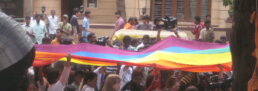
LGBT victory in India!
“I am what I am, so take me as I am”- Johann Wolfgang von Goethe.
In an eloquent, unanimous, landmark ruling that opens with the above quote, India’s highest court, the Supreme Court, decriminalised consensual gay sex between adults earlier this month. This judgement is the first important step in the recognition of rights of the LGBT community in India.
Consensual gay sex between adults has been criminalised in India in terms of section 377 of the Indian Penal Code (IPC) which states that, “whoever voluntarily has carnal intercourse against the order of nature with any man, woman or animal, shall be punished…” Other acts that are considered to be “against the order of nature” and therefore prohibited by section 377, are bestiality, and acts of carnal intercourse against minors and non-consenting adults. These aspects will, rightly so, remain and unaffected by the Supreme Court ruling.
Section 377 is an antiquated provision that dates back to the British colonial rule. This erroneous, homophobic and discriminatory section that considers consensual gay sex between adults to be on par with bestiality, was introduced in 1861. India, like many other former British colonies, continued to carry the yoke of colonial legislation, much to the detriment of the LGBT community whilst England decriminalised homosexual conduct in 1967.
Earlier this year in April, British Prime Minister Theresa May indicated that she, “deeply regrets” the laws introduced during British colonial rule and that the UK government would support legislative reform in the Commonwealth. This international support is important but real change was brought about by domestic Indian activists who took up the cause. The Naz Foundation, an Indian NGO, and other petitioners, took the matter to the Delhi High Court and won in 2009, resulting in the striking down of section insofar as it criminalised consensual gay sex.
This was overturned on appeal in 2013, after a coalition of Christian, Hindu and Muslim groups petitioned the court. The court indicated that only a small portion of India’s population was part of the LGBT community and therefore repealing section 377 would be “legally unsustainable”. They also indicated that it was up to the legislators to amend the law not the judiciary. Attempts to introduce legislative changes through parliament and a private members bill were also thwarted on several occasions by conservative parliamentarians.
Thankfully, the Naz Foundation, (an organisation’s whose managing director had previously been arrested under this archaic law), and the other petitioners determined to keep up the fight for equal treatment of the LGBT community, did not give up. They eventually found themselves before the Supreme Court in January this year, resulting in this seminal September judgement.
The LGBT community has been victimised and persecuted in India for many years. Many have kept their sexual orientation a secret for fear of stigmatisation, rejection, arrest and extreme violence. In 2015, it was reported that 1284 people were arrested under section 377, however it is not clear how many of those arrested were adults engaged in consensual acts how many acts involved a lack of consent.
Many members of the LGBT community report being blackmailed by police or by people threatening to report them to the police due to their sexual orientation, a “crime” that attracted anything from 14 years to life in prison.
When they are not being financially extorted many report being forced to perform sexual favours. Others have been harassed in the workplace and have been unable to report it due to fear of arrest and further victimisation. Their vulnerability has been greatly exacerbated by the fact that the law, and its enforcers have always been against them. Now at least the law is charting the way for an India that embodies equality for all regardless of one’s sexual orientation.
Decriminalisation is just the first step. LGBT communities and activists will need to challenge societal stigma and a prevailing intolerance to anything that does not fit into a heterosexual paradigm. India is unfortunately not the only country in the world that battles with prejudice in this regard.
To date there are 69 countries in the world that criminalise consensual gay sex between adults. In Sudan, homosexuality attracts the death penalty. Whilst this momentous judgment from the Indian Supreme Court of Appeal is to be celebrated it is also a vital moment to reflect on the struggles of LGBT communities across the world, particularly in the 69 countries that continue to treat homosexuality as a crime.
The Supreme Court of India has done right by the LGBT community, hopefully the rest of Indian society will follow, and LGBT people will no longer live in fear. As aptly put by the Supreme Court, “History owes an apology to the members of this community and their families, for the delay in providing redressal for the ignominy and ostracism that they have suffered through the centuries.”
** This article appeared in the Star Newspaper on Thursday 20 September under the title "Indian Penal Code Change an LGBT victory"
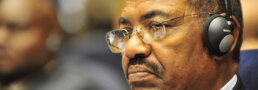
Bashir elected as 2020 NCP's Presidential Candidate
On Friday 10 August 2018, Sudan’s ruling party, the National Congress Party (NCP) chose President Bashir to run as their candidate in the 2020 elections. Bashir has been in power since 1989 and in 2020 he will be 76 years old. The current Constitution provides for a two-term limit and the National Congress Party’s Charter also has similar restrictions. Both will have to be amended to make Bashir’s 2020 candidacy a legal possibility- a move that is unfortunately very common in many African countries.
Whilst serving as a colonel in the army, Bashir came to power in 1989 in a bloodless coup that saw then Prime Minister Sadiq al-Mahdi lose power to this very ambitious colonel. Bashir’s new military government suspended all political parties, dissolved parliament and began a process of introducing Islamic law into the national legal code. In 1993 Bashir was appointed President and three years later, in 1996 elections were held. Although there were no political parties at the time, 39 other candidates ran as individuals against Bashir. He reportedly secured 75.4 percent of the vote though the elections were clouded with allegations of irregularities.
In 1998 Bashir introduced a new Constitution that allowed the formation of political parties. That same year he flexed his military muscle to oust his former ally, Hassan al Turabi ,whom he suspected of trying to topple him. Bashir also had to deal with the Sudan’s People Liberation Army who had been fighting for independence from Khartoum for several years. They eventually succeeded resulting in South Sudan becoming an independent nation in 2011 and Africa’s newest country.
Sudan’s first multi-party elections were held in 2010. Reports of intimidation and rigging were rife as Bashir allegedly clinched 68% of the vote, marking the commencement of another 5 year presidential term.
In 2015 elections were held and Bashir was declared victorious having secured 94% of the vote. Once again, allegations of electoral fraud, and the suspicious withdrawal of the main opposition parties raised questions about the credibility of his victory.
In addition to dubious election results, Bashir’s reign has been characterised by brutality, racism, inequality, crimes against humanity and genocide. Bashir stands accused by the International Criminal Court (ICC) of five counts of crimes against humanity including, murder, extermination, torture and rape. Two counts of war crimes including intentionally attacking civilians, pillaging and three counts of genocide. These allegations have their roots in the context of the Darfur War, which has seen the death of at least 300 000 people and displacement of millions.
Sudan under Bashir’s leadership has seen a handful of individuals prosper economically whilst the majority languish in abject poverty and endure grave human rights violations. If Bashir’s last few years in office are anything to go by then this bid for an additional term in office may spell further disaster for many of the Sudanese people. If he should step down, (unlikely but let us for a moment dabble with this fantasy) it could also change the international criminal justice landscape as those nations who have failed to arrest Bashir, as required by the ICC, will no longer be able to hide behind the claim that he has immunity as a sitting head of state.
To run again in 2020 the Constitution must be amended, a move, the Consultative Counsel of the NCP is reportedly willing to make. One prominent member, Amin Hassan Omer has voiced his concern about these dangerous amendments.
Bashir would not be the first African leader to do whatever it takes to stay in power. President Pierre Nkurunziza of Burundi is another example. His desire to stay in power by seeking an unconstitutional additional term led to nationwide outcry and protests in 2015. The state’s response was heavy-handed and violent leading to the alleged commission of crimes against humanity including murder, persecution, rape and torture.
Under Ugandan President Museveni’s watch the Constitution was amended in 2005 to remove presidential term limits allowing him to continue his reign. This year a court upheld the amendment that removes the presidential age limit of 75. Museveni is 73 years old and intends to run for elections again in 2021.
Rwanda’s Kagame may stay in office until 2034 if he so desires after a 2015 referendum was conducted and a majority of Rwandans voted in favour constitutional amendments of presidential term limits allowing him to run for another term in office.
Presidential term limits are an essential part of democracy and the erosion of the concept in many African countries is bringing nations to ruin. As aptly expressed by Barack Obama “Africa’s democratic progress is at risk when leaders refuse to step aside when their terms end… when a leader tries to change the rules in the middle of the game, just to stay in office, it risks instability and strife.”
**This article appeared in the Star Newspaper on 16 August 2018
28 years later Liberians still seeking justice
Sunday 29 July 2018 marked the 28th anniversary of the St Peters Lutheran Church Massacre where 600 women, men and children died, in Monrovia, Liberia in 1990. Despite new leadership in Liberia, domestic justice for this Massacre, and other heinous crimes committed during the civil wars remains elusive.
The First Liberian Civil War, which started in December 1989 is the backdrop against which this Massacre took place. Then President Samuel Doe’s grip on power was in jeopardy as rebel forces loyal to Charles Taylor and Prince Johnson sought to relieve him of his duties. Taylor led the National Patriotic Front of Liberia (NPF) a group which included Johnson in the beginning until he decided to lead his own faction, the Independent National Patriotic Front of Liberia (INPF). In an attempt to consolidate power Doe’s Armed Forces of Liberia, Special Anti-Terrorist Unit (SATU) became notorious for its indiscriminate use of violence particularly against tribes or groups they suspected of supporting the rebel movement.
By June 1990 roughly 2000 Monrovian residents fleeing war had taken refuge in the St Peters Lutheran Church which was a designated Red Cross humanitarian aid shelter. Roughly 45 SATU soldiers, led by its commander Moses. W. Thomas entered the Church and started shooting indiscriminately. They then proceeded to hack many any survivors they found to death with their machetes. According to an eye witness, the shooting continued for nearly 2 hours and the hacking and use of machetes for another 3 hours. Survivors of the Massacre shared blood curdling accounts of how the soldiers mercilessly killed until Thomas ordered his men to stop.
The First Civil War lasted for 7 years. An estimated 250,000 people were killed with 750,000 fleeing the country and an additional 1.2 million people were internally displaced. In July 1997 the election Charles Taylor as president signalled the official end of the war but the Second Liberian Civil War was not far behind as unrest continued to bubble under the surface. War broke out again two years later in 1999 and lasted until 2003.
In 2005 the transitional government enacted a law for the established a Truth and Reconciliation Commission mandated to investigate human rights violations perpetrated from 1979 to 2003. The TRC was mandated to make recommendations for a variety of issues including investigations, prosecutions, and reparations for victims.
The TRC issued its final report and recommendations on July 1, 2009 to then President Johnson Sirleaf. Among other recommendations, the TRC recommended the creation of an Extraordinary Chamber within the Courts of Liberia to prosecute war crimes and crimes against humanity, including the St Peters Massacre. To this day domestic accountability remains non-existent and no Extraordinary Chambers have been created. Not a single person has been held to account before a Liberian court.
Many Liberians hoped that justice would be done during Johnson Sirleaf’s tenure and now under recently elected President George Weah, the pressure for accountability continues to grow. In July this year, 76 Liberian, African and international non-governmental organisations championed the cause and called for the Liberian government to pursue domestic accountability and over 4,000 Liberians signed a petition presented to the Liberian Congress calling for justice.
International accountability efforts have been more robust including a civil suit filed in February this year against Thomas in the US which is where he currently resides after moving there in 2000. Ironically, Thomas entered the US under the banner of an immigration programme designed to assist victims of war crimes. Thomas is being sued by 4 survivors of the Church Massacre who survived only because they hid under dead bodies during the attack. They are seeking compensatory damages after losing family members and suffering grave trauma. Although Doe met a nasty end as he was tortured and decapitated by Prince Johnson’s forces, many others implicated in egregious crimes are alive and well thriving with impunity.
Other Liberia related cases in the US include the 2008 conviction of Charles Taylor’s son, Chuckie Taylor, for torture committed in Liberia. In relation to failure to disclose their involvement in grave human rights violations, former rebel commander Mohammed “Jungle Jabbah” Jabbateh was convicted for immigration fraud in 2017, as was former NPFL Minister of Defense, Tom Woewiyu in 2018.
In Belgium, former NPFL Commander Martina Johnson has been charged with crimes against humanity committed in Liberia. Alieu Kosiah from the United Liberation Movement (ULIMO) has also been charged by Swiss authorities with crimes against humanity and torture committed in Liberia and Agnes Reeves Taylor, Charles Taylor’s ex-wife has been charged with torture in UK.
Until the crimes of the past are adequately addressed Liberians will continue to be burdened by their past. True reconciliation and justice is essential for nation building. As the calls for justice ring loud and clear, perhaps Weah’s government will take heed.
** This article was published in the Star Newspaper on 2 August 2018
World Cup football- more than just a beautiful game
The World Cup 2018 has come to an end with the French Les Bleus lifting the coveted trophy. World Cup football has the ability to unite billions as all gather around to watch the tournament unfold. It is a time when true, die hard football fans endure (with good humour) peanut gallery commentary from people who barely understand the game yet are full of opinions on who should be substituted and whether that was really a handball. In addition to testing the patience of genuine football supporters, the World Cup football also brings to light the political and social dynamics of our time, particularly with regard to the question of immigration, diversity and tolerance.
Manchester United’s Romelu Lukaku, a Belgian national with Congolese heritage wrote a poignant article about how he is portrayed by European media. When he excels he is called “Belgian”, when he underperforms he is the “Belgian striker with Congolese origins”. Born in Belgium, to a Congolese mother and father, Lukaku tells the story of how, as a young football star, he constantly had to show his Belgian ID to other boys’ parents because they could not believe he was Belgian. Whilst proud of his African heritage, Lukaku considers himself Belgian.
A similar dynamic exists with the very diverse French national team. Of the 23 who qualified to represent France this year - 15 have African roots. Goalkeepers: Steve Mandanda, defenders Djibril Sidibe,Adil Rami, Samuel Umtiti, Presnel Kimpembe, Benjamin Mendy, midfielders Paul Pogba, Blaise Matuidi, Corentin Tolisso, N'Golo Kante, Thomas Lemar, Steven Nzonzi, and strikers, Kylian Mbappe, Ousmane Dembele, and Nabil Fekir.
Goalkeeper Alphonse Areola’s parents migrated from the Philippines making that 16 out of 23 who have an immigration background that extends past the borders of Europe.
Between the 15 of them Algeria, Morocco, Cameroon, Senegal, Mauritania, Togo, Mali, Angola, DRC, Guinea are represented. As eloquently stated by writer Mark Gleeson, it shows the “African diaspora that is a hotbed of footballing talent”. However, therein lies the complexity when one reads the news and social media commentary from Africans who continue to seriously refer to the French team as the 6th African team.
This statement (albeit made with good intentions and very often in jest), when posited seriously risks neglecting the battle for recognition that fully fledged French nationals with an immigration background have to fight for in France as many French people cannot and will never accept them as French nationals. The same is evident in other European countries, as witnessed by Lukaku who frequently had to brandish his ID.
The French team has a long history of diversity and this has always been highly politicised. When they bring back trophies it is celebrated, when they do not - it is highlighted as a problem that needs to be addressed.
When France won the World Cup in 1998, many celebrated the diversity of the team but it was classically used by the right wing leaders like Jean-Marie Le Pen who stated a “team that is full of players of African and Arab descent has nothing to do with the ideals of France.” Fast forward to 2010 and his daughter, right wing leader of the Rassemblement National (formerly known as the National Front) Marine Le Pen, said that “when I look at Les Bleus, I don’t recognize France or myself” one can easily see how the heterogeneity of the team can easily be used to fuel a political agenda. The same curious phenomenon has played out in Germany’s failure to progress to the final 16. This turn of events has been latched on to by to by right wing politicians who blame the early exit on the German players who have an immigration background and their alleged lack of identification with the national team.
Many remain proud of the rainbow-nature of the French Team and feel it represents how open and tolerant France is when it comes to immigrants, yet there have been several occurrences and emerging trends that are diametrically opposed to that notion. For example, the increasing support for populist leaders and parties that proselytize anti-immigration sentiment. Or the incident in April this year, where 100 members of the anti-immigration group Generation Identitaire, blocked Col de l'Echelle in the French Alps which marks the border between France and Italy and is a popular crossing point for immigrants.
Whilst the diversity of the French national team should be thunderously applauded, encouraged and treasured it should not be used as smoke-screen for genuine threats to integration and acceptance of diversity.
Now that the World Cup has come to an end, genuine football fans will be consoled by the return of league football. Hopefully World Cup’s afterglow and France’s multicultural team victory will truly serve as a launch pad for genuine social cohesion and tolerance.
** This article appeared in the Star Newspaper on Thursday 19 July 2018.
Peace in South Sudan?
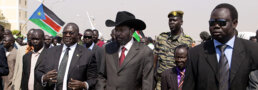
These are the words of John Janoub, a displaced South Sudanese man whose family was burnt alive in an attack allegedly led by government soldiers in 2016. Janoub is one of over 4 million South Sudanese people who have been forced from their homes since the beginning of the conflict in 2013. Will the recently signed Khartoum Declaration Agreement between the leaders of the two warring factions, constitute some sort of exordium for lasting peace?
On 21 June, President Salva Kiir and rebel leader Dr.Riek Machar met in Addis Ababa for the first time in two years. The objective of the meeting was to begin a fresh round of discussions on bringing peace to war torn South Sudan. A subsequent meeting was held in Khartoum, where a new peace Agreement was signed on 27 June, just a few days before the 30 June renewal of sanctions deadline imposed by the UN Security Council.
The parties agreed to “open corridors” for humanitarian aid and to release political prisoners and prisoners of war. A transitional unity government is to be created in 4 months, and it will remain in power for 3 years, after which elections will be held. A permanent ceasefire was “agreed” but reports indicate that it has already been violated.
South Sudan, the youngest nation in the world, gained its independence from Sudan in 2011. Two years later in 2013, it descended into chaos as Kiir accused his then deputy Machar, of attempting to oust him. Machar denied this and fled to lead the Sudan People's Liberation Movement-in-Opposition (SPLM-IO) who have continued to battle the government’s Sudan People’s Liberation Movement (SPLA) engulfing the country in a civil war that has seen the deaths of an estimated 300 000 people.
As noted by the UN Commission on Human Rights in South Sudan, the conflict is no longer just a battle between Machar and Kiir, it is a “series of inter and intracommunal conflicts, reigniting and encompassing historical localised conflicts and contests over land, resources and power.” The emergence of other militia groups, including the Dinka Mathiang Anyoor (who have mostly been integrated into the SPLA), the Nuer White Army, and the fact that the SPLM-IO has spilt into the Machar faction and a new faction loyal to the current First Vice President Taban Deng, has further complicated the situation.
According to the UN approximately 2.4 million people have fled to neighbouring countries, whilst a further 2 million have been internally displaced.
Horrendous crimes are perpetrated with impunity against innocent civilians by uncontrolled armed militia and government soldiers. This includes the pervasive commission of rape, genital mutilation, castration, torture, arbitrary detention, and summary executions.
Children as young as 12 are forcibly removed from their families and conscripted into fighting forces on both sides. UNICEF estimates that 72% of South Sudanese children are unable to attend school due to the decimation of schools and loss of teachers. Hunger is also preventing many from attending school.
Famine has been formally declared by the Food and Agriculture Organization of the UN, UNICEF and the World Food Programme. The humanitarian crisis is exacerbated by government’s restriction of access to humanitarian aid workers, and the SPLA forces’ continued attacks on peacekeepers, aid convoys and aid workers. The economy has collapsed, and the limited road infrastructure can barely support the transportation of aid.
Accountability for crimes committed since 2013 is lacking with the UN Commission identifying this as the “foremost factor for the perpetuation of the current conflict.” Criminal trials or court martials for crimes committed by the SPLA and its opponents, have been few and far between. Plans to establish a hybrid court remain on hold as the government continues to drag its feet in signing the necessary memorandum to commence the process.
All of these factors combined explain why the situation must change. Regrettably, peace deals in South Sudan have failed before and this one is not off to a good start. The ink on the December 2017 Cessation of Hostilities Agreement was barely dry before hostilities resumed within 24 hours.
This Agreement could be the first of many steps to lasting peace, however, armed militia terrorise the country and sustain themselves through the barrel of a gun. Do Machar and Kiir wield sufficient control over their own forces? Could they convince the other militia groups to ceasefire? What about the deep mistrust between the two parties and the tribal divides are severely and detrimentally entrenched? There is still Taban Deng to consider- where does he stand after this Agreement?
If this Agreement is not upheld, South Sudan will continue to unravel.
**This article appeared in the Star Newspaper on 5 July 2018
Immunity, Accountability and Politics – the AU’s bid for an ICJ Advisory Opinion
This article first appeared on Blog of the Gronigen Journal of International law on 25 June 2018.
Sudanese President Omar al-Bashir’s continued visits to Rome Statute Member States, including but not limited to Chad, Malawi, the Democratic Republic of Congo, South Africa and most recently Jordan, have caused much legal consternation and uproar from both divides of the head of state immunity debate. It has also provided significant momentum for the African Union (AU) to finally seek an advisory opinion from the International Court of Justice (ICJ) on the matter.
During the 30th Ordinary Session of the African Union, held on 28 – 29 January 2018, the Assembly requested that, ‘the African Group in New York immediately place on the agenda of the United Nations General Assembly a request to seek an advisory opinion from the International Court of Justice on the question of immunities of a Head of State and Government and other Senior Officials as it relates to the relationship between Articles 27 and 98 and the obligations of States Parties under International Law.’ Much has been said about the significance of this step. The advisory opinion will depend on how the AU’s question and request is framed and, as that is still unknown, it is difficult to speculate on what the possible outcomes could be. However, it may not be as straightforward as has been frequently suggested, and more importantly, whilst it is important to explore all legal avenues, one should ask – will the opinion (irrespective of the outcome) really help to settle the immunity question?
The first challenge will be that the AU and its Member States must somehow gain the support of the United Nations General Assembly (UNGA), which is easier said than done. Are there enough states which would support this venture? Granted, there are states which hold that the Court’s opinion would be advantageous as the ICJ would look at the issue broadly and through the lens of all existing international law instead of being chained to the Rome Statute.
However, there are some states who feel an ICJ opinion is unnecessary as they stand by the ICC rulings, which, albeit for different reasons, have come to the same conclusion – namely that States Parties have a duty to arrest Bashir (or anyone else who finds themselves in his unenviable position) for subsequent transfer to the Hague. Many States are of the opinion that (depending on the outcome), the Court’s ruling could cause a friction between two international courts that are tasked to adjudicate different matters, and have different jurisdictions, as noted by Tladi and Du Plessis.
There are also those who firmly believe that the ICC Appeals Chamber should have the last word on the matter. Jordan’s failure to arrest Bashir when he was on Jordanian soil on 29 March 2017 resulted in the Pre-Trial II Chamber ruling that Jordan committed an act of non-compliance warranting referral to the United Nations Security Council (UNSC) and the Assembly of States Parties (ASP). Jordan is appealing the decision and, for the first time, the Appeals Chamber will have to consider a referral of a State Party’s non-compliance to the ASP and the UNSC. It will be difficult for the Appeals Chamber to avoid addressing the proverbial elephant in the room, which is of course the question of head of state immunity and arrests by third party states at the ICC’s behest.
Assuming the UNGA is successfully convinced to submit the request to the ICJ, the next hurdle could be that the ICJ may refuse to grant the advisory opinion, as they it has discretion. The Statute of the ICJ states in Article 65 that it ‘may’ give an advisory opinion when so requested by authorised bodies of the UN. To date, the ICJ has never refused to give an advisory opinion, but its predecessor, the Permanent Court of International Justice (PCIJ), did do so. The PCIJ refused to render an opinion on the Eastern Carelia matter on the basis that one of the parties to the dispute, Russia, (which was also not a member of the League of Nations at the time) had not given its consent. As pointed out by Akande, the ICJ is yet to refuse on this basis and, although the Carelia precedent is yet to be officially overturned, it has not been applied.
If the UNGA is convinced to make the request and if the ICJ accepts, it remains to be seen just how much weight the advisory opinion will carry in reality. Advisory opinions are generally non-binding. However, they are regarded as having ‘moral authority and significant legal weight’ and they ultimately set a precedent that is likely to be followed. But in the context of the immunity question, is this sufficient to guide the conduct of states? Some would respond in the affirmative, indicating that part of the allure of the ICJ advisory opinion is that it would be accepted by the AU given that they have requested it and due to the fragile, distrustful relationship between the AU and the ICC.
In my opinion, that would only be the case if the ICJ issued an opinion that favours customary international law immunity for sitting heads of state. Assuming the ICJ did the opposite and issued an advisory opinion that was in line with the ICC judges’ steadfast bottom line, states pursuing a purely political agenda will behave in their own self-interest regardless of what the law states. For example, when Bashir visited South Africa, where the domestic International Criminal Court Act was very clear on the duty to arrest suspects wanted by the ICC and there was a domestic arrest warrant for Bashir, a court order preventing his departure and another ordering his arrest, political considerations still prevailed over the rule of law and justice for egregious crimes.
Therefore, politically – and realistically – speaking, the ICJ opinion may not move the issue any further if it does not correlate with political self-interest. Naturally, from a purely legal perspective, no matter the outcome, it will be of significance but, as pointed out above, political considerations have regrettably been known to trample on the rule of law.
The road ahead for the AU and its desire for an advisory opinion is rough and lengthy and only time will tell. In the meantime, the ICC Appeals Chamber has a valuable opportunity by way of the Jordan appeal to make its mark on this never-ending debate.
South Africa and the ICC- dismantling the international criminal justice system to protect one individual?
**By Navi Pillay and Angela Mudukuti
This article first appeared in the Daily Maverick on 19 June 2018
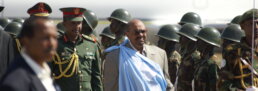
The introduction of the International Crimes Bill before the Portfolio Committee on Justice and Correctional Services, two weeks ago, signals steadfast resolve to eventually withdraw from the Rome Statute. Impetus and momentum for withdrawal was generated by President Bashir’s 2015 visit and the subsequent fall out from South Africa’s failure to arrest him. South Africa finds itself in this quandary because of President Bashir. This raises the question - is South Africa dismantling its own international criminal justice framework for one man who they will, despite withdrawal, still be legally obligated to arrest and surrender for as long as he remains wanted by the International Criminal Court?
Just over a year after President Bashir’s Sudan 01 plane took off from the Waterkloof Air Force Base, the Minister of Justice and Correctional Services, Michael Masutha, announced South Africa’s intention to withdraw from the Rome Statute. The Notice of Withdrawal was sent to the United Nations Secretary General on 19 October 2016. Subsequent litigation resulted in the revocation of the Notice of Withdrawal due to the government’s failure to firstly withdraw the Implementation of the Rome Statute Act (ICC Act) before submitting its notice of withdrawal. Having learnt from previous mistakes and in a bid to follow proper procedure this time round, Masutha, has opted to begin with the introduction of a Bill that repeals the ICC Act which will allow withdrawal from the ICC to follow.
South Africa’s reasons for withdrawal have ranged from allegations that the ICC is targeting Africa, to statements about how, as stated in the Preamble of the new International Crimes Bill, “South Africa, in exercising its international relations with heads of state of foreign countries, particularly heads of state of foreign countries in which serious conflicts occur or have occurred, is hindered by the Implementation of the Rome Statute of the International Criminal Court Act, 2002, which together with the Rome Statute of the International Criminal Court compel South Africa to arrest heads of state of foreign countries wanted by the ICC”.
Bashir stands accused of two counts of war crimes, five counts of crimes against humanity and three counts of genocide against black Sudanese people. This includes allegations of murder, extermination, torture, rape, and exercising “full control” over the vicious and ruthless Janjaweed militia who chanted, “ You make this place dirty; we are here to clean this place. You Blacks are like monkeys. You are not human” as they razed villages to the ground.
To date, Bashir is the only head of state who is wanted by the ICC. There are currently no other heads of state who are in the same position. Therefore, South Africa is about to withdraw from the Rome Statute, abandon the international criminal justice project, amend its ICC Act, Geneva Conventions Act, Torture Act and 6 other domestic Acts, for an individual whom they will have to arrest despite withdrawing should he be found on South African soil.
Why does the duty to arrest and surrender Bashir, survive withdrawal from the Rome Statute?
Withdrawal is effective one year after a notice of withdrawal is sent to the United Nations Secretary General. Even after that one year has lapsed, withdrawal does not absolve South Africa from its legal obligation to arrest and surrender President Bashir as article 127 (2) of the Rome Statute states that a state “shall not be discharged from the obligations arising from this Statute while it was a Party to the Statute”.
South Africa’s withdrawal will not affect its obligations to cooperate with the ICC with regard to “proceedings in relation to which the withdrawing State had a duty to cooperate and which were commenced prior to the date on which the withdrawal became effective.”
Given that South Africa has had a duty to arrest President Bashir since his first indictment in 2009, that duty will survive withdrawal from the ICC system. Burundi finds itself in the same position, despite its withdrawal coming into effect on 27 October 2017. It remains bound to cooperate with the ICC’s ongoing investigation.
The subsistence of this duty is also spelled out in the International Crimes Bill as it too acknowledges in section 36 (2), that “any cooperation” with the ICC related to criminal investigation and proceedings that South Africa had a duty to cooperate prior to withdrawal, must still be handled in terms of the provisions of the existing ICC Act. Needless to say, the ICC Act is very clear on South Africa’s duty to cooperate with the ICC, hence why proponents for withdrawal are anxious to have it repealed.
For as long as President Bashir remains wanted by the ICC, South Africa, like every other state party, will remain legally bound to arrest him.
In addition, South Africa not only domesticated the Rome Statute, but the 2009 ICC arrest warrant for war crimes and crimes against humanity was also domesticated in terms of South African law by a duly authorised magistrate. Thus, for all intents and purposes there is a South African warrant for Bashir’s arrest.
Is the visit of one head of state really worth all of this trouble? Why is the government going to such great lengths to protect one individual?
Not to mention that if, South Africa successfully withdraws from the Rome Statute, this will, as has been written by many commentators including Max du Plessis, constitute a wasted opportunity to show leadership. The ICC is by no means a flawless institution above reproach. On the contrary, it is in need of constructive engagement from its member states and South Africa could be playing a leading role in helping improve the ICC and its relationship with many African states who have increasingly become dissatisfied with the Court’s case selection and efficiency.
This is a crucial time for parliamentarians, politicians, policy makers and the leaders of this nation to consider the grave consequences of withdrawing from the ICC. Given the nations familiarity with the consequences of apartheid, which is also a crime under the Rome Statute, the significance of South Africa’s membership to the only permanent international accountability mechanism, should not be lost on its leaders.
South Africa played a crucial role as the leader of the like-minded group that fought for the creation of a strong independent ICC. South Africa’s commitment to fight impunity was captured succinctly in former Minister of Justice, Dullah Omar’s wise words in 1998, “The creation of the ICC will send a clear and unequivocal message that perpetrators of these crimes will not get away with impunity.”
Surely constructive and sustained engagement is the way forward, not withdrawal.
Navi Pillay is the former United Nations High Commissioner for Human Rights and member of the Africa Group for Justice and Accountability. Angela Mudukuti is the International Criminal Justice Lawyer at the Wayamo Foundation.
End in sight for family's long wait for justice?
Last week the High Court handed down an important judgment that will have an effect on justice for apartheid era crimes in South Africa. After seeking closure for over 30 years, Nokuthula Simelane’s family is finally one step closer to what has seemed elusive and unattainable for so long- justice for their slain anti-apartheid heroin.
Nokuthula Simelane was a 23-year-old university student who acted as courier for the armed wing of the ANC, Umkhonto we Sizwe. On September 8, 1983, she was kidnapped by the apartheid police, then known as the South African Police.
Nokuthula was brutally tortured and beaten to the point of being unrecognisable. She was never seen again. In 1996 a police docket was opened and subsequent TRC proceedings revealed who her abductors and suspected murderers were. Amnesty for her abduction was granted, yet no one applied for amnesty for her murder. Amnesty for her assault and torture was denied. By law, those who were denied amnesty or failed to apply for amnesty remain liable for prosecution.
After years of Nokuthula’s family engaging with the National Prosecuting Authority (NPA), requesting an inquest into Nokuthula’s unlawful killing or a decision for prosecution to be made, the NPA and its various leaders since 1996 failed to act. Only after legal papers were filled by Nokuthula’s sister and Mayor of Polokwane Thembi Nkadimeng, in May 2015, seeking to compel the NPA to either refer the disappearance of Nokuthula for an inquest or to make a decision with regard to prosecution, did the NPA take action. Papers filed included sworn affidavits from former NDPP Vusi Pikoli who stated that there was grave political interference, including politicians obstructing prosecutors from pursuing apartheid era cases.
In the hopes of avoiding a messy legal battle and finally acknowledging their duty as the prosecuting authority, the NPA decided to prosecute 4 of the men suspected of having murdered Nokuthula.
Willem Coetzee, Anton Pretorius, Timothy Radebe and Frederik Mong were arrested and charged with the murder of Nokuthula on 26 February 2016. They were granted bail and their trial was set to begin on 25 July 2016 but due the dispute regarding legal fees the case was postponed four times since then.
Coetzee, Pretorius who left the South African Police Service (SAPS) in 1997, and Mong (who is still employed by SAPS) are of the opinion that the Commissioner of Police should pay their legal fees given that they were acting within the course and scope of their duties as employees of the erstwhile South African Police. The Commissioner, amongst other assertions, made the case that the accused “exceeded the power of their duties” and that it would somehow be against the state and the public interest to assist with their legal fees. Therefore, they refused to assist with the legal fees, effectively preventing the criminal trial from proceeding.
As explained by Adv Ntsebeza, the context at the time of Nokuthula’s abduction and murder was one where “state sanctioned extra-judicial killings and rampant criminality was the order of the day.” Therefore, although their actions were clearly unlawful they were still acting in the course and scope of their duties as part of the apartheid machinery. This however, is a matter that the trial court will likely determine when this trial eventually starts.
Last week, Judge C Pretorius, ruled that the Commissioner must pay reasonable legal fees as it was undeniably in the interests of justice, and because during the time of the abduction, torture and murder of Nokuthula, all three were employed by the then SAP and were acting under instructions from their superiors, the late Brigadier Hennie Muller and Brigadier Willem Schoon who is still alive. This raises another important question that has been asked for years -when will the brigadiers and senior politicians who called the shots during apartheid answer for their crimes?
Judge Pretorius also noted that the “state machinery had failed the deceased and her family abysmally” with all the delays and failure to institute criminal proceedings all these years. The NPA has had every opportunity to right the wrongs of the past and provide justice for apartheid era crimes, yet it has taken over 30 years and the trial has not even begun.
In the meantime, Nokuthula’s father and brother have passed without knowing what really happened to her and without being able to bury her remains in a dignified manner. Hopefully, the trial will begin soon and run its course without further delay. This will be the first prosecution of apartheid era perpetrators since the 2007 plea bargain in the Adriaan Vlok matter, and hopefully the first of many. The wait has been long enough and this judgment emphatically states that such untenable delay is unacceptable. No one should have to wait over 30 years for closure, justice and answers.
** This article appeared in the Star Newspaper on 14 June 2018